Last Updated on 10/07/2026
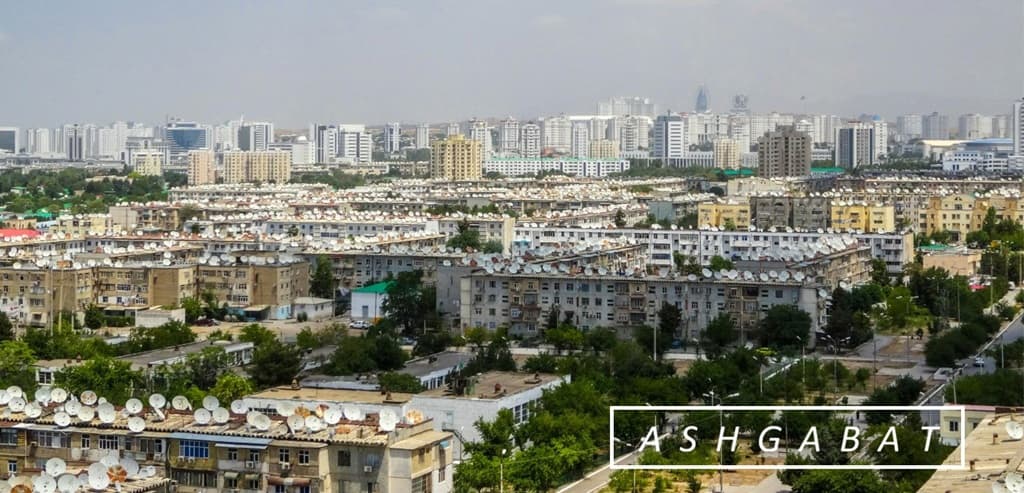
Ashgabat is one of the most unusual capitals on earth — a city rebuilt almost entirely in white Carrara marble, holding the world record for the highest density of marble-clad buildings, and set between the Karakum Desert and the Kopet Dag mountains on the old Silk Road. It is also one of the hardest places to travel independently: Turkmenistan runs a tightly controlled tourism system where a licensed local guide is not a luxury but, in practice, a requirement — the guide (with their affiliated operator) arranges the Letter of Invitation, the permits and the registration that make your visit possible in the first place.
Our platform connects you directly with licensed, English-speaking local guides in Ashgabat — you message a guide, agree on the itinerary and the fee, and arrange everything directly with them. No agency markup, no commission, no middleman.
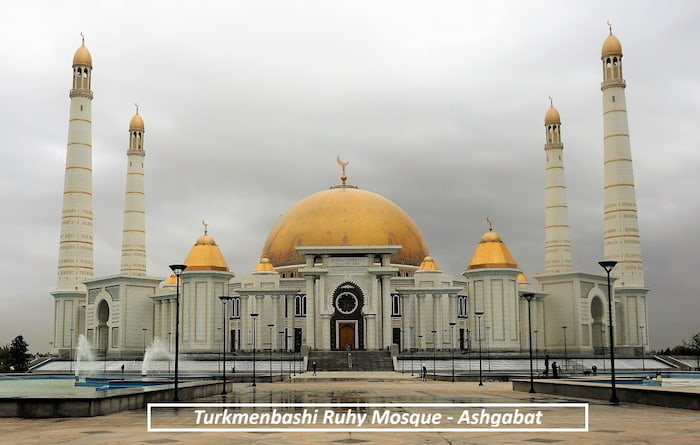
The Turkmenbashi Ruhy Mosque in Gypjak — one of the largest mosques in Central Asia and a standard stop on a private Ashgabat city tour.
Licensed tour guides in Ashgabat
The guides listed here are independent professionals licensed to work in Turkmenistan, and most work with a registered operator who can issue the Letter of Invitation required for your visa. You can message them directly to discuss dates, group size, languages, permits and a custom itinerary across Ashgabat and beyond.
Dovletmyrat G.
Why hire a licensed guide in Ashgabat
Turkmenistan operates one of the most controlled tourism systems in the world, and the rules are the single biggest reason to travel with a licensed local guide rather than attempt the country alone. Almost every visitor needs a tourist visa, and that visa is issued only on the basis of a Letter of Invitation (LOI) certified by the State Migration Service — which, for tourists, can only be arranged through a licensed Turkmen operator. In other words, the guiding relationship begins weeks before you land: your guide or their affiliated agency prepares the paperwork that lets you enter at all.
Once you are in the country, the practical frictions continue, and a licensed guide absorbs them. Foreigners must register with the migration service shortly after arrival for longer stays, cannot enter designated restricted zones (border areas, parts of the desert and the Caspian coast) without a special permit, and are expected to move through a landscape of police checkpoints where a registered guide and correct documentation make the difference between a smooth day and a stalled one. Beyond Ashgabat itself, being accompanied by a licensed guide is effectively expected for most itineraries.
Then there is the reason you actually came. Ashgabat’s marble monuments look spectacular but read as blank without context — the Neutrality Arch, the Independence Monument, the Wedding Palace and the endless white ministries encode a very particular national story, and a good guide makes them legible. The same guide knows which government buildings you may not photograph (a real and strictly enforced restriction in the capital), when the Ruhy Mosque is open, and how to time a desert run to the Darvaza crater so you see it glowing after dark rather than as a hole in daylight.
Sample private tours in Ashgabat
Full Day · 6–7 hours · City
Ashgabat White Marble City Tour
The complete introduction to the capital. The day covers the futuristic marble core — the Arch of Neutrality, the golden-domed Independence Monument, the Wedding Palace (Bagt Koshgi), and the ministry avenues that earned Ashgabat its Guinness record — alongside the National Museum of Turkmenistan (Parthian rhytons and archaeology) and the Turkmen Carpet Museum. The tour usually ends at the vast Turkmenbashi Ruhy Mosque in Gypjak. Travel is by private air-conditioned car; your guide will point out where photography is and isn’t permitted.
Half Day · 4 hours · Culture & History
Ancient Nisa & Ashgabat Highlights
A short drive from the city brings you to Nisa, the UNESCO-listed capital of the Parthian Empire, where earthen fortress walls and excavated palaces sit against the Kopet Dag foothills. Combined with a stop at the Ertugrul Gazi Mosque (built in the Ottoman style) and the Halk Hakydasy Memorial Complex, this half-day pairs deep antiquity with the modern nation’s memory of itself.
Half Day · 4 hours · Equestrian
Akhal-Teke “Heavenly Horses” Experience
Turkmenistan’s national symbol is the Akhal-Teke — the ancient breed prized for its metallic-sheen coat and endurance, celebrated so highly that 2026 is officially the national “Year of the Heavenly Horses.” A visit to a stud farm near Ashgabat lets you meet the horses up close, watch them worked, and (for riders) arrange a session. A natural pairing for anyone drawn to Turkmen culture rather than only the architecture.
Full Day · 8–10 hours · Nature & Village
Kow Ata Underground Lake & Nokhur Village
West of Ashgabat, the Kow Ata underground thermal lake sits inside a vast cave — warm, mineral-rich, sulphurous water you can swim in. The day continues into the Kopet Dag mountains to Nokhur, a remote village where distinctive stone architecture and old Turkmen traditions survive. A full day on the road with your driver-guide, well away from the marble capital.
Overnight · 2 days · Desert Expedition
Darvaza Gas Crater — “Gates of Hell” Overnight
The country’s signature landscape: a flaming crater in the heart of the Karakum Desert, burning continuously for decades, at its most extraordinary after dark. The trip runs by 4×4 with an overnight camp near the crater, so you catch it both at sunset and under the stars. Permits and the desert logistics are arranged by your guide; because the route crosses toward restricted areas, this is a tour that genuinely cannot be improvised alone.
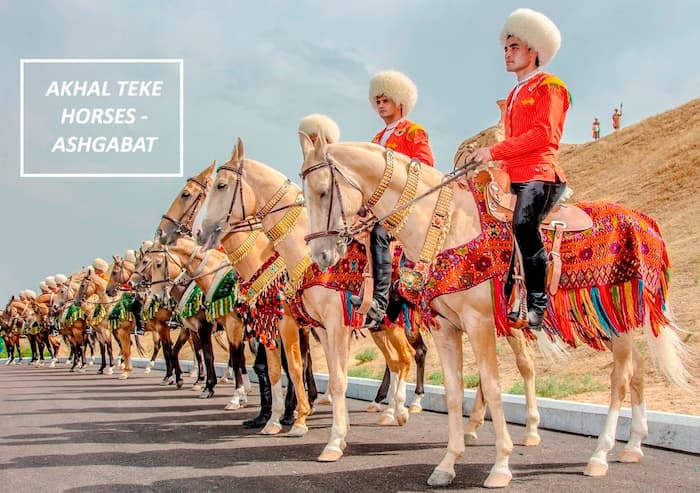
The Akhal-Teke, Turkmenistan’s “heavenly horses” — 2026 is the official national Year of the Heavenly Horses.
Average guide fees in Ashgabat
Turkmenistan is considerably cheaper than Europe for guiding, though the controlled system means most tours are quoted as a package including the guide, a private air-conditioned car and the required permits. Prices below are typical private-tour ranges for groups of 1 to 4 travellers. The visa, the Letter of Invitation, restaurant meals, museum entry and any 4×4/camping costs on the desert trip are quoted and paid separately. Larger groups and multi-day Silk Road itineraries (Merv, Konye-Urgench, Yangykala Canyon) are quoted on request.
| Private tour | Duration | Fee |
|---|---|---|
| Ashgabat White Marble City Tour | 6–7 hours | $180–$300 |
| Ancient Nisa & Ashgabat Highlights | 4 hours | $120–$180 |
| Akhal-Teke Horses Experience | 4 hours | $130–$200 |
| Kow Ata & Nokhur Village Day Trip | 8–10 hours | $220–$320 |
| Darvaza “Gates of Hell” Overnight | 2 days | $250–$450 |
Transport, permits and the Letter of Invitation
Because independent movement is limited and public transport is impractical for visitors, every meaningful itinerary in Turkmenistan runs on a private car with a driver-guide. Standard vehicles are air-conditioned sedans for the city and 4x4s for the desert; all are essential in a climate where summer temperatures in the Karakum routinely exceed 45°C.
The paperwork is the part travellers underestimate. Your guide or their registered operator handles the Letter of Invitation, certified by the State Migration Service, which most nationalities need before a visa can be issued on arrival at Ashgabat airport — allow several weeks. They also handle migration registration after arrival and any special permits for restricted zones, including much of the route toward Darvaza. Treat these as non-negotiable: travelling without correct registration or permits can lead to fines or worse, and it is exactly what you are paying a licensed local to manage.
Languages, payment and what to expect
Most licensed Ashgabat guides work in English and Russian alongside Turkmen; German, French and a few other languages are available in smaller numbers and benefit from earlier booking. Confirm your language when you enquire, as the licensed-guide pool is small.
A few practical points save first-timers real friction. Turkmenistan is a cash economy — most businesses, hotels and even airlines do not reliably accept credit cards, and ATMs are limited, so bring enough US dollars in clean, newer notes to exchange for manat. Photography is restricted: do not photograph government buildings, palaces, presidential sites or police, and follow your guide’s cue in the capital. Dress modestly for mosque visits. Tipping is not obligatory but appreciated — a few dollars per day per group is a fair guide.
When to visit Ashgabat
The comfortable windows are April–May and September–October, with warm days, cool evenings and desert trips that are actually pleasant. Summer (June–August) is severe — the marble city radiates heat and the Karakum can pass 45°C, making the Darvaza crater a genuinely demanding trip best done overnight. Winter (December–February) is cold and clear, quiet at the monuments, but short on daylight. Note that 2026 carries the national theme “Homeland of Purposeful Heavenly Horses,” with Akhal-Teke celebrations through the year.
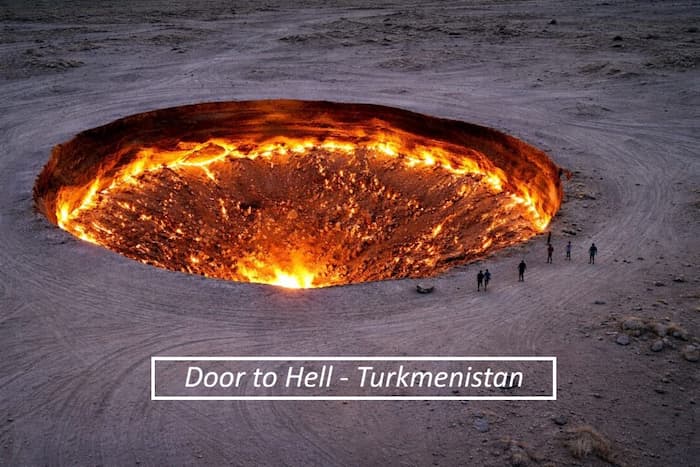
The Darvaza Gas Crater — the “Gates of Hell” — burning in the Karakum Desert, best seen after dark on an overnight tour.
Frequently asked questions
Do I really need a licensed guide to visit Ashgabat and Turkmenistan?
For Ashgabat city itself you have a little more freedom, but for the country as a whole a licensed guide is effectively required. Turkmenistan issues tourist visas only on the basis of a Letter of Invitation arranged through a licensed local operator, restricts independent movement, and expects foreigners to be accompanied for most itineraries beyond the capital. A licensed guide handles the invitation, the permits and the migration registration — the practical machinery that makes the trip possible at all.
How much does a private tour in Ashgabat cost?
A full-day private city tour with a licensed guide, a private air-conditioned car and permits typically runs $180–$300 for a small group. Half-day tours start around $120, and the overnight Darvaza desert trip runs roughly $250–$450 depending on the 4×4 and camping arrangements. The visa, Letter of Invitation, meals and museum tickets are quoted separately.
Can I visit the Darvaza Gas Crater (the “Gates of Hell”) on a private tour?
Yes, and it is the most requested trip in the country. It is done by 4×4 from Ashgabat with an overnight camp near the crater so you see it glowing after dark, when it is at its most dramatic. Because the route runs toward restricted desert areas, permits and logistics are arranged by your licensed guide — it is not a trip to attempt independently.
Do I need a visa and a Letter of Invitation, and can my guide arrange it?
Almost every nationality needs a tourist visa, and that visa depends on a Letter of Invitation certified by the State Migration Service, which for tourists can only be obtained through a licensed Turkmen operator. Your guide or their affiliated agency arranges the invitation; you then collect the visa on arrival at Ashgabat airport (or at a Turkmen embassy). Start the process several weeks ahead, as approvals take time.
Can I photograph the marble buildings and monuments in Ashgabat?
Many monuments are fine, but photography of government buildings, ministries, palaces, presidential sites and police is restricted and enforced in the capital. This is one of the clearest reasons to have a local guide: they will tell you exactly where you can and cannot take pictures, which avoids an uncomfortable encounter with security.
What languages do the guides in Ashgabat speak?
English and Russian are the most common working languages alongside Turkmen, with German, French and a few others available in smaller numbers. Because the licensed-guide pool is small, book your preferred language two to three weeks ahead, especially in the spring and autumn seasons.
What is the best time of year for a tour in Ashgabat and the desert?
April–May and September–October are the most comfortable. Summer is severe, with desert temperatures above 45°C that make the Darvaza trip demanding. Winter is cold and quiet with short days. Whenever you come, the city and desert trips are built around avoiding the midday heat.
How do I pay my guide — cash or card?
Turkmenistan runs largely on cash. Cards are rarely accepted and ATMs are limited, so bring US dollars in clean, recent notes to change into local manat. Confirm the fee and currency with your guide when you book; most quote in US dollars.
Request a Free Quote
Share your tour details using the form below and receive a personalized quote if you can not reach the guides on this page.