
Last Updated on 22/10/2026
Licensed Egyptologist Guides and Private Tours in Luxor: West Bank, East Bank and Day Trips
Royal tombs, temple complexes and the Upper Egypt temples within a day’s drive, planned directly with a guide licensed by Egypt’s Ministry of Tourism and Antiquities.
Luxor is the site of ancient Thebes, split by the Nile into the East Bank of Karnak and Luxor Temple and the West Bank of royal tombs and mortuary temples. This page lets you contact an independent licensed guide directly, compare half-day and full-day programmes, check guiding fees and entrance tickets and plan day trips to Dendera, Abydos, Esna, Edfu and Kom Ombo.
OfficialGuides lists independent guides in Luxor who hold the tour guide licence issued by Egypt’s Ministry of Tourism and Antiquities and belong to the Egyptian General Tourist Guides Syndicate (EGTGS). You write to the guide, agree the programme and the fee with them, and pay the guide on the guide’s own terms. Some guides quote the guiding fee alone; others give one price that already includes transport and entrance tickets, so ask which of the two you are being offered.
Private Tour Guides in Luxor
The guides below are based in Luxor. Each listing shows the guide’s languages and the programmes they run; send your dates, group size and the sites you want to see.
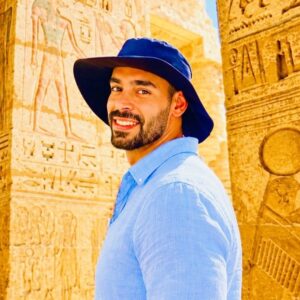
Hamada S.

Ahmed S.
Mohamed H.
Contact the guide directly through the listing. Fees, languages and availability are set by each guide.

Valley of the Kings, West Bank. The standard ticket covers three tombs from those open on the day.
Who Can Guide in Luxor: The Egyptian Licence
Tour guiding in Egypt is a licensed profession governed by Law No. 121 of 1983 on tourist guides and their syndicate. A licensed guide in Luxor holds a licence from the Ministry of Tourism and Antiquities and is a member of the Egyptian General Tourist Guides Syndicate. Many Luxor guides studied tourism guidance or Egyptology at university, which is why listings on guide marketplaces describe them as Egyptologists as well as licensed guides.
The licence matters on the West Bank in a practical way. In the Valley of the Kings, guides do not explain inside the tombs; they brief you at each tomb entrance and you walk through the corridors on your own. A guide who knows which tombs are open that day and briefs you well before each one is the main reason to bring one to the valley at all.
Languages: English-Speaking and Other Guides
Most guide listings for Luxor on guide marketplaces are in English, and the guides listed on this page are English-speaking. Guides who work in French, Spanish, German, Italian or other languages are fewer, and some operators add a supplement for a language other than English; listings on booking platforms show supplements such as EGP 1,000 per group or EUR 15 per group. When you write to a guide, state the language you need in the first message.
What a Private Tour in Luxor Covers
Luxor divides naturally into two halves. The West Bank holds the royal necropolis of Thebes; the East Bank holds the city, the Nile Corniche and the two great temples of Amun. Most visitors need at least one day for each bank.
West Bank: Valley of the Kings
The Valley of the Kings was the burial ground of the pharaohs of the 18th, 19th and 20th Dynasties. According to the Ministry of Tourism and Antiquities, it holds more than sixty tombs and around twenty unfinished ones. Only a rotating selection is open on any day. The standard ticket gives entry to three tombs; the tombs of Tutankhamun (KV62), Seti I (KV17) and Ramesses V and VI (KV9) need separate tickets on top of the standard one. An electric tram (taftaf) runs from the visitor centre up to the tombs, and there is no shade in the valley.
West Bank: Temple of Hatshepsut at Deir el-Bahari
The mortuary temple of Hatshepsut rises in three terraces against the cliffs of Deir el-Bahari, a short drive from the Valley of the Kings. Since 1961 a Polish-Egyptian archaeological and conservation mission from the University of Warsaw has worked on rebuilding the temple, and new sections have opened to visitors over the decades. Allow an hour to an hour and a half for the terraces and the porticoes.
West Bank: Medinet Habu, the Ramesseum and the Valley of the Queens
Medinet Habu, the mortuary temple of Ramesses III, keeps much of its painted relief and sees fewer visitors than Karnak. The Ramesseum, Deir el-Medina (the workmen’s village) and the Valley of the Queens fill a second day on the West Bank. The tomb of Nefertari in the Valley of the Queens is currently closed for restoration, with no announced reopening date. The two seated Colossi of Memnon stand beside the road and are a usual photo stop.

Temple of Hatshepsut at Deir el-Bahari, restored with the Polish-Egyptian mission working on site since 1961.
East Bank: Karnak
Karnak is a complex of temples, pylons, chapels and obelisks dedicated mainly to Amun, built and enlarged over many centuries. Its Great Hypostyle Hall has 134 columns. Plan two to three hours and go at opening time, before the heat and the coach groups. The Temple of Mut inside the complex has its own ticket.
East Bank: Luxor Temple and the Avenue of Sphinxes
Luxor Temple stands on the Corniche about three kilometres south of Karnak, linked to it by the Avenue of Sphinxes. It stays open into the evening and is lit after dark, so many guides plan Karnak in the morning and Luxor Temple at sunset. Closing time changes with the season; your guide will confirm it for your dates.
Ways to See Luxor with a Private Guide
Half day on one bank
Four to five hours on the West Bank or three to four hours on the East Bank, started early to stay ahead of the midday heat.
Both banks in one day
West Bank in the early morning, a break through the hottest hours, Karnak or Luxor Temple in the late afternoon.
Day trips by car
North to Dendera and Abydos, or south to Esna, Edfu and Kom Ombo, with a driver and the guide for the whole day.
Balloon and the river
A sunrise balloon flight over the West Bank or a few nights on the Nile to Aswan, combined with guided days on land.
Sample Itineraries with a Private Guide in Luxor
The programmes below are starting points. Each one is planned with the guide, who adjusts the order to the open tombs, the season and your pace. The fee range shown for each programme is the guiding fee for the group; car and tickets are separate unless the guide quotes them together.
West Bank: Valley of the Kings, Hatshepsut and the Colossi of Memnon
Start at the Valley of the Kings at opening time and visit three tombs with a briefing at each entrance. Continue to the Temple of Hatshepsut at Deir el-Bahari, then stop at the Colossi of Memnon on the way back. Add Tutankhamun or Seti I if you want one of the separately ticketed tombs.
East Bank: Karnak in the Morning, Luxor Temple at Sunset
Walk through the Great Hypostyle Hall, the Sacred Lake and the open-air museum at Karnak early in the day. Return in the evening for Luxor Temple when it is lit, walking part of the Avenue of Sphinxes.
Both Banks in One Day
The West Bank sites first, lunch during the hottest hours, then Karnak in the afternoon and Luxor Temple as the light fades. A long day that suits visitors with a single day in Luxor, often those arriving from Cairo or from a Nile cruise.
Day Trips from Luxor: Dendera, Abydos, Esna, Edfu and Kom Ombo
The temples north and south of Luxor are reached by road in a private car. These are long days, and the guiding fee reflects the hours on the road as well as the time at the sites.
North: Dendera and Abydos
Abydos lies about 160–170 km north of Luxor, around three hours by road; Dendera lies about 60–65 km north, around an hour away. The round trip covers roughly 360 km with about six hours of driving. Abydos is the Temple of Seti I; Dendera is the Temple of Hathor. A Dendera-only morning takes about five hours.
South: Esna, Edfu and Kom Ombo
Esna, with the Temple of Khnum, lies about 55 km south of Luxor. Edfu, the Temple of Horus, is one and a half to two hours away, and Kom Ombo, the double temple of Sobek and Horus, about 165 km and two and a half hours. The ticket at Kom Ombo includes the Crocodile Museum.
Visitors staying on the Red Sea also come to Luxor for the day: Hurghada is about 280–290 km away, four to five hours each way by road, which makes a day of 14 to 18 hours door to door.
Guiding Fees and Entrance Tickets in Luxor
A private guide in Luxor charges about USD 50–100 for a half day and USD 100–180 for a full day on both banks, per group. The fee is for the guide’s time; entrance tickets are paid separately per person, and a private car is added if the guide does not include one.
| Service | Typical range (USD, per group) |
| Guiding fee, half day on one bank | 50–100 |
| Guiding fee, full day on both banks | 100–180 |
| Guiding fee, day trip to Dendera and Abydos or Esna, Edfu and Kom Ombo | 155–225 |
| Private car with driver in Luxor, if not included | 20–40 |
Entrance tickets are priced in Egyptian pounds (EGP) for foreign adults; students with a valid ID usually pay half. Main sites: Valley of the Kings EGP 750 (three tombs), Tutankhamun’s tomb EGP 700, Seti I’s tomb EGP 2,000, Ramesses V and VI EGP 220; Temple of Hatshepsut EGP 440; Karnak EGP 600, Temple of Mut EGP 200; Luxor Temple EGP 500; Luxor Museum EGP 400; Mummification Museum EGP 220; Medinet Habu, the Valley of the Queens, Deir el-Medina and the Ramesseum EGP 220 each. On day trips: Dendera EGP 300, Abydos EGP 260, Esna EGP 200, Edfu EGP 550 and Kom Ombo EGP 450. At about EGP 54 to the US dollar, the Valley of the Kings ticket comes to roughly USD 14.
The Luxor Pass, sold by the Ministry, covers the archaeological sites of both banks for five days: USD 130 for the standard pass and USD 250 for the premium pass, which adds the tombs of Seti I and Nefertari. Holders of a Cairo Pass get 50 percent off the Luxor Pass. Tickets for individual sites can also be bought in advance on the Ministry’s egymonuments.com platform.
Guide and Driver: How Transport Works
In Luxor the guide usually travels with you in an air-conditioned car with a separate private driver. The West Bank sites are spread out, and a car is the practical way to move between the Valley of the Kings, Deir el-Bahari and Medinet Habu. Many guides arrange the car themselves and quote it with the guiding fee; otherwise budget about USD 20–40 for a private driver in Luxor. Day trips to Dendera, Abydos or Edfu always use a car for the whole day.
Getting to Luxor
From Cairo, Luxor is 671 km by rail. The flight takes about an hour, or four to five hours door to door with airport transfers, and the overnight sleeper train takes about ten hours. Most Nile cruises between Luxor and Aswan cover a stretch of about 200–215 km over three or four nights, and most depart from Luxor. From Hurghada on the Red Sea, the road runs about 280–290 km. Many trips to Luxor begin or end in Cairo; for the pyramids of Giza and the museums, see our page on licensed guides and private tours in Cairo.
Best Time for a Private Tour in Luxor
October to February is the most comfortable period and also the busiest. Average daytime highs are about 35 °C in October, 29 °C in November, 23 °C in December, 22 °C in January and 25 °C in February, with nights dropping to 6–9 °C in January. March reaches about 29 °C and April 34 °C. From May to the end of September daytime highs stay above about 37 °C, and June to August reach 39–41 °C. It almost never rains.
In the hot months, guides start at opening time on the West Bank, stop during the middle of the day and continue at Karnak or Luxor Temple in the late afternoon and evening.

Luxor Temple at dusk. The temple stays open into the evening; the closing time changes with the season.
Balloon Flights, Dahabiya and Nile Cruises
Hot air balloons take off from the West Bank at sunrise, with hotel pickup around 04:00 and a flight of 45 to 60 minutes. Shared baskets are listed at about USD 54–107 per person depending on the operator and the departure, and a private basket at about USD 549. Balloon flights are not guided tours; guides can help you plan them around a West Bank day.
A dahabiya is a traditional sailing boat with a small number of cabins. A Luxor to Aswan sailing of five days and four nights is listed from GBP 1,839 per person. Larger cruise ships cover the same route in three or four nights with stops at Esna, Edfu and Kom Ombo. A private guide is useful before or after the cruise, for the Luxor sites the cruise programme leaves out.
Visa and Official Travel Advice
Most visitors need a visa for Egypt. The tourist visa on arrival costs USD 30; the official e-visa portal is visa2egypt.gov.eg. Check the entry rules for your nationality there before you travel. UK travellers can read the Foreign, Commonwealth & Development Office advice on gov.uk.
Frequently Asked Questions
How much does a private tour guide cost in Luxor?
About USD 50–100 for a half day and USD 100–180 for a full day, per group. Long day trips to Dendera and Abydos or to Esna, Edfu and Kom Ombo are about USD 155–225. Entrance tickets and the car are separate unless the guide quotes an all-inclusive price.
Can guides go inside the tombs in the Valley of the Kings?
No, guides do not explain inside the tombs. Your guide briefs you at the entrance of each tomb, and you walk through it on your own. Choosing which three tombs to see is part of the guide’s work, since the open tombs change.
Is one day enough for Luxor?
One full day covers the main sites of both banks, at a fast pace. Two days, one per bank, leave time for Medinet Habu, the Valley of the Queens or a longer visit to Karnak. A third day suits a trip to Dendera and Abydos or to Edfu and Kom Ombo.
How do I know a guide in Luxor is licensed?
Licensed guides hold a licence from the Ministry of Tourism and Antiquities and belong to the Egyptian General Tourist Guides Syndicate. The guides listed on this page work under that licence.
Is the Luxor Pass worth buying?
It pays off if you plan several days and the premium tombs. The standard pass costs USD 130 and the premium pass USD 250 for five days. Seti I’s tomb alone is EGP 2,000, so visitors who want Seti I and several West Bank and East Bank sites usually come out ahead with the premium pass.
Can I book a guide directly through this site?
You contact the guide directly through the listing. There is no booking or payment system on this page; you agree the programme and the fee with the guide, and pay the guide on the guide’s own terms.
Plan Your Private Tour in Luxor
Write to one of the licensed guides above with your dates, the sites you want to see and the size of your group.
We also list licensed guides in Rome and other destinations.
Request a Free Quote
If you cannot reach the guides on this page, send your tour details with the form below and receive a personalised quote.
OfficialGuides is an information platform; guides are independent professionals responsible for their own services and fees. Ticket prices and opening hours are set by the Ministry of Tourism and Antiquities and can change. See our terms of service and privacy policy.
This page is also available in: polski