Last Updated on 20/11/2026
Private Tours in Orvieto With a Licensed Guide: the Duomo, St Patrick’s Well and Etruscan Day Trips
Half-day walks on the rock, full-day trips into southern Tuscany and northern Lazio, typical guiding fees and how guiding works in Italy.
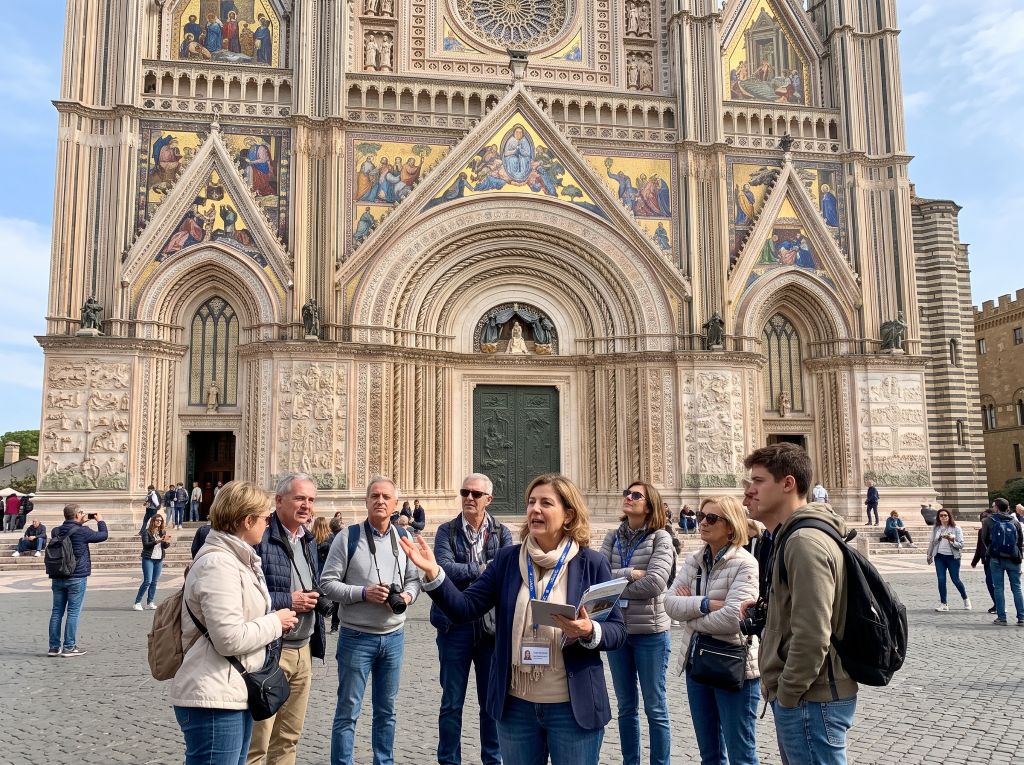
Orvieto sits on a block of volcanic tuff, 157 m above its railway station, and most of what visitors come for is within a short walk: the Duomo with Luca Signorelli’s frescoes, St Patrick’s Well and a city of caves and tunnels underneath. An independent licensed guide explains the town in a half day and takes you further on full-day trips to Pitigliano, Lake Bolsena, Viterbo or the Etruscan tombs of Tarquinia and Vulci. You pay one fee for the group rather than a price per person; see prices for typical half-day and full-day figures.
Elena R.
Every guide listed on OfficialGuides for Orvieto is a licensed tourist guide under Italian Law 190/2023, entered in the national register of tourist guides kept by the Ministry of Tourism. You write to the guide directly, agree the route and the fee, and pay the guide.
Licensed Guides in Orvieto: How Guiding Works in Italy
In Italy, tourist guiding is a regulated profession under Law No. 190/2023 and its implementing decree, Ministerial Decree No. 88. A guide qualifies through a national examination, or through recognition of a qualification obtained abroad, and is then entered in the national register of tourist guides (Elenco Nazionale delle Guide Turistiche) kept by the Ministry of Tourism. The licence is valid throughout Italy, which matters around Orvieto: the town is in Umbria, while Pitigliano and Sovana are in Tuscany and Viterbo, Tarquinia and Vulci are in Lazio. A licensed guide from Orvieto can work in all three regions.
While working, the guide carries a personal identification badge (tesserino) with photo and registration number and shows it on request. You can also check a name on the Ministry of Tourism’s national platform for tourist guides.
Two places with their own guides
Two sites on this page run their own visits. Orvieto Underground, the network of caves beneath the town, can only be visited with local staff; there is no self-guided entry, and tickets are sold at Piazza Duomo 23. Isola Bisentina on Lake Bolsena is private land: it opens on set days only, and every visit is led by a certified island guide approved by the Lazio Region. Your own guide plans the day around these visits and explains everything before and after them.
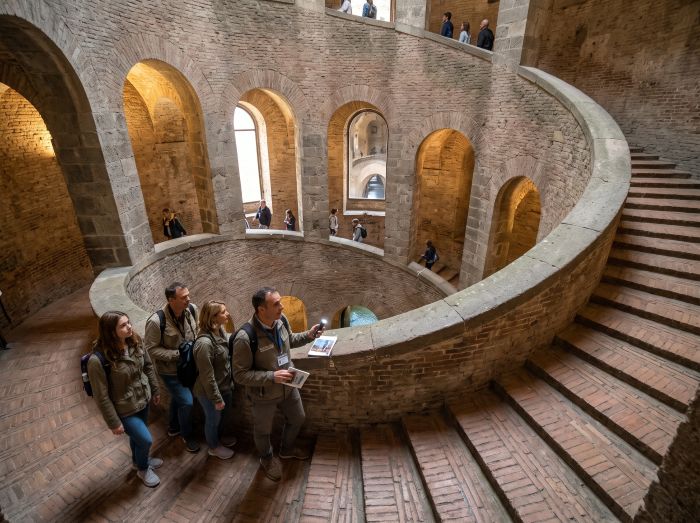
St Patrick’s Well and its double spiral ramp with a guide (ai illustrated)
Private Tours in Orvieto
A first visit usually combines the cathedral with the well and at least one underground site. Three kinds of private day work well here:
Cathedral and town
Duomo, Torre del Moro and the medieval streets.
Etruscan and underground
Caves, the necropolis and the Etruscan museum.
Day trips by road
Southern Tuscany, Lake Bolsena and northern Lazio.
The Duomo, San Brizio Chapel and St Patrick’s Well
The Duomo exists because of a relic. In 1263, according to tradition, a consecrated host bled onto the altar cloth during a Mass at Bolsena; the cloth, the Corporal, was taken to Orvieto, and the event led to the feast of Corpus Domini and to the building of the cathedral. Inside, the San Brizio Chapel holds the Last Judgement cycle that Fra Angelico began in 1447 and Luca Signorelli completed between 1499 and 1504; the Corporal is kept in the chapel opposite. The walk then crosses town to St Patrick’s Well, dug for Pope Clement VII after he took refuge in Orvieto during the Sack of Rome in 1527. Antonio da Sangallo the Younger designed it with two spiral ramps of 248 steps each that never meet, so that pack animals could go down and come up without crossing; the well is 54 m deep. To mark the work, the pope had Benvenuto Cellini strike a medal inscribed Ut populus bibat, “so that the people may drink”.
Etruscan and Underground Orvieto
Before the Romans, Orvieto was the Etruscan city of Velzna. The Romans deported its population to the shore of Lake Bolsena in 264 BC, which is why the two places share their history. Orvieto Underground shows caves, an old olive mill and dovecotes cut into the tuff on a guided visit of about an hour. Two more Etruscan stops complete the half day: the necropolis of Crocifisso del Tufo and the Claudio Faina Etruscan Museum. The Carta Unica combined ticket covers these sites together with Orvieto Underground, the cathedral, the Torre del Moro and the well.
Day Trips From Orvieto With a Licensed Guide
Orvieto lies where Umbria, southern Tuscany and northern Lazio meet, so a car opens up a dense map of tuff towns, Etruscan tombs and a volcanic lake. The full-day fee covers guiding; the vehicle is arranged and charged separately.
Pitigliano and Sovana
Pitigliano, less than an hour away, is built along a tuff ridge and is known as “Little Jerusalem” for its Jewish community; the synagogue dates from 1598, and the Jewish Museum leads through the old ghetto with its ritual bath, kosher butcher’s and unleavened-bread oven. Nearby Sovana, a village of fewer than 500 inhabitants, has the Tomba Ildebranda, a two-storey Etruscan tomb from the 2nd century BC named after Hildebrand of Sovana, later Pope Gregory VII. Between the towns run the Vie Cave, sunken Etruscan roads cut deep into the rock.
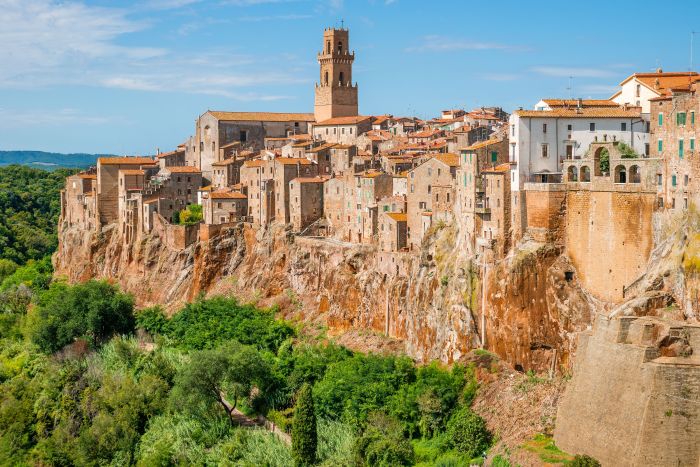
Pitigliano on its tuff ridge in southern Tuscany
Lake Bolsena and Isola Bisentina
Lake Bolsena, Europe’s largest volcanic lake, is about 20 km from Orvieto. In Bolsena itself you see where the miracle of the Corporal took place. Boats to Isola Bisentina leave from Capodimonte, about 15 minutes away, and from Bolsena, about 35 minutes; the island covers 17 hectares, with Renaissance chapels, garden terraces and the Malta dei Papi, an underground prison reached by a 30 m shaft. The visit costs €46.50 per adult, made up of €25 for the island guide, €1.50 booking fee and €20 for the boat, paid at boarding; check the opening days on the island’s official site before you plan.
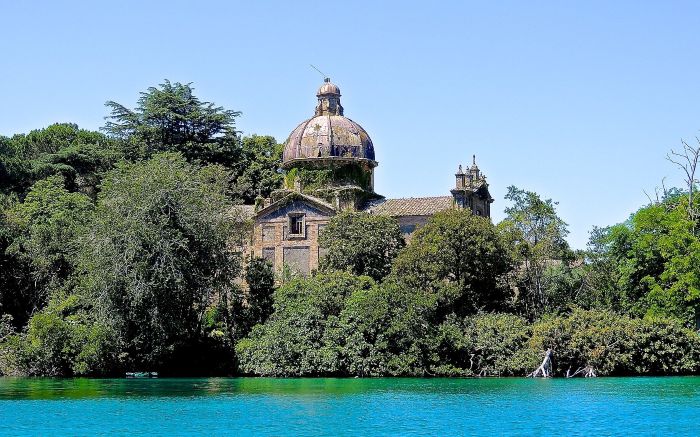
Isola Bisentina, reached by boat from Capodimonte or Bolsena
Viterbo and Acquapendente
Viterbo was the seat of the popes for part of the 13th century. In the Palazzo dei Papi, the longest conclave in Church history lasted 1,006 days, from 1268 to 1271, before Gregory X was elected; the Loggia of the Blessings dates from 1267. On the way back, Acquapendente is a stage on the Via Francigena pilgrim route; the crypt of its cathedral, an 11th-century Romanesque space with 24 columns, holds a shrine modelled on the Holy Sepulchre in Jerusalem.
Tarquinia, Norchia and Vulci
The Monterozzi necropolis at Tarquinia is a UNESCO World Heritage Site together with Cerveteri; of about 200 painted tombs, 22 can be visited inside the fenced area. At Norchia, the Etruscan aristocracy cut tomb façades in two or three rows into the cliffs of a tuff valley. Vulci combines an archaeological and nature park with a museum in the Castello dell’Abbadia, which Alessandro Farnese, later Pope Paul III, remodelled, beside a bridge about 30 m high over the Fiora river; park admission is €10. The three sites are far apart, so most guides choose two in one day.
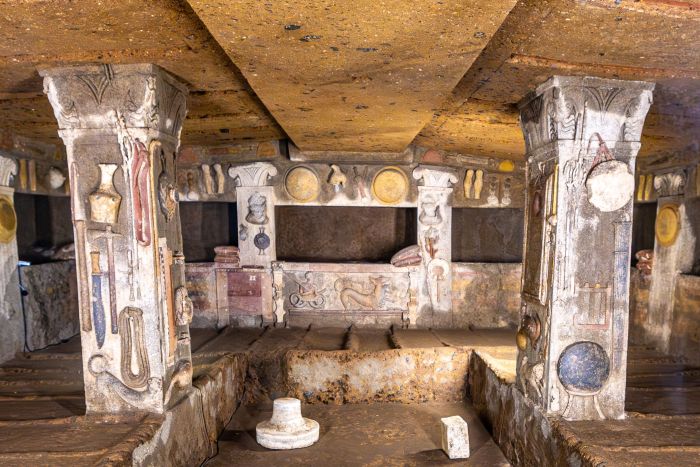
A painted tomb in the Monterozzi necropolis, Tarquinia
Travelling on? See our pages on licensed guides in Rome and private tours in Florence.
Orvieto Tour Guide Prices
Guiding fees in Orvieto are typical figures, not fixed tariffs: each guide sets their own fee, and you agree the final price with the guide. Fees are per group.
| Service | Typical guiding fee (per group) |
| Per hour | around €60–90 |
| Half day (3–4 hours) | around €250–350 |
| Full day (incl. day trips, guiding only) | around €550–650 |
Not included: entry tickets, the Isola Bisentina visit, vehicle and driver, and meals. Group size and the programme affect the fee, so mention both in your first message.
Guide, Driver or Both
The guiding fee covers the guide only. Some tours from Rome sell a car with an English-speaking driver who is not a licensed guide. For the Duomo, Tarquinia or Pitigliano, ask whether the person with you is a licensed tourist guide, and whether your guide drives or works with a separate driver on day trips.
Getting Around Orvieto
Orvieto is on the Florence–Rome railway line. A funicular climbs from the station to Piazza Cahen every 10 minutes on weekdays and every 15 minutes on public holidays; a single ride costs €1.30. Minibuses connect Piazza Cahen with Piazza Duomo, and the old town is easy to walk. For the day trips, a private vehicle is the practical choice, since the Etruscan sites have little public transport.
When to Plan Your Orvieto Tour
Orvieto is visited all year. Isola Bisentina opens only in its summer season and on set days, so check before you plan that trip. Corpus Domini is the town’s major feast, when the Corporal is carried through the streets in procession. Opening hours of the Duomo can change for services.
Premium Options
For families or small groups, ask your guide about a larger private vehicle for day trips, or about combining Lake Bolsena with lunch by the water. On Isola Bisentina, a circuit around the island by boat is an option for travellers who prefer not to land.
Guides in English and Other Languages
This page is for travellers who want a guide in English; each guide’s profile lists the languages they work in. If your group needs a second language, mention it in your first message.
Visa for Italy
Italy is part of the Schengen area, and entry rules depend on your nationality. Check the current requirements on the Italian Ministry of Foreign Affairs portal, Visto per l’Italia.
Frequently Asked Questions
How much does a private tour guide cost in Orvieto?
A typical guiding fee is around €60–90 per hour, €250–350 for a half day and €550–650 for a full day, per group. Each guide sets their own fee; tickets and transport are extra.
Can an Orvieto guide take me to Tuscany and Lazio?
Yes, the Italian guide licence is valid nationwide. A guide registered under Law 190/2023 can lead you in Pitigliano, Viterbo or Tarquinia as well as in Orvieto.
Can I visit Orvieto Underground with my own guide?
No, the caves are visited only with local staff. Your guide can book the visit, explain the context and continue the tour afterwards.
How do I get to Isola Bisentina?
Only by boat from Capodimonte or Bolsena, on the island’s open days. The guided visit and boat cost €46.50 per adult, and the island’s own guides lead the walk.
How do I know my guide is an official guide?
Ask to see the tesserino, the personal guide badge. Every official guide in Italy is entered in the national register and carries a badge with photo and registration number; a professional guide shows it without hesitation. If a seller cannot tell you the name of your qualified guide before the day, ask why.
Plan Your Day in Orvieto
Write to a licensed Orvieto guide with your dates, group size and the places you have in mind.
Questions Before You Book?
Fees, ticket prices and opening times are indicative and can change; confirm them with your guide. See our legal disclaimer and privacy policy.
This page is also available in: Italiano