Last Updated on 09/11/2026
Licensed Guides in Salzburg for the Old Town, Hohensalzburg and Salzkammergut Day Trips
Private walks through Mozart’s city, the fortress above it and the Sound of Music locations, plus full days to Hallstatt, the Wolfgangsee and the Eagle’s Nest, with private guide for your group.
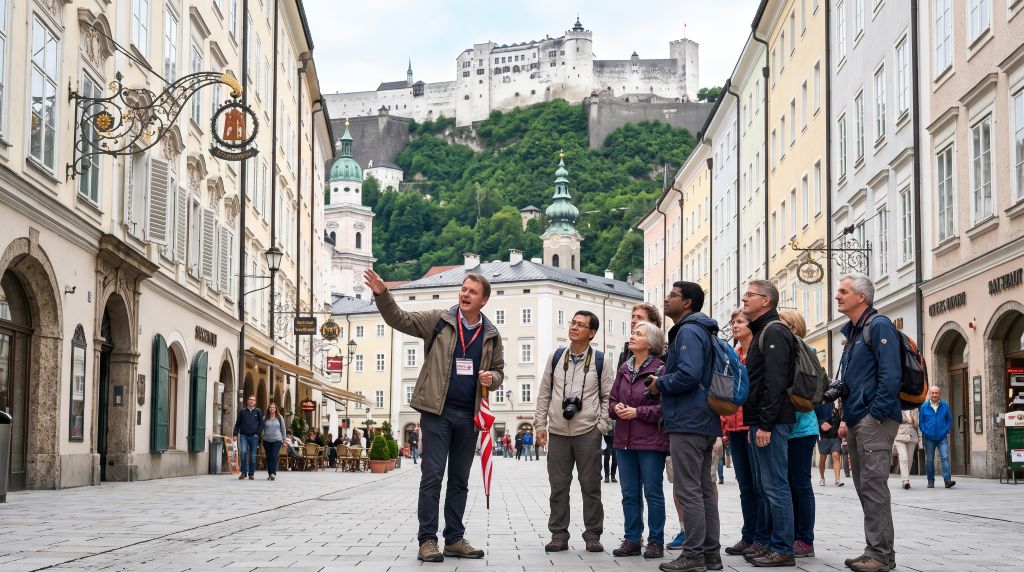
Book an independent licensed guide in Salzburg and agree the day directly with them: the lanes of the Old Town and Mozart’s Birthplace, the Hohensalzburg Fortress, or a full day out to Hallstatt, the Wolfgangsee or the Eagle’s Nest. Guiding fees are charged per group, not per person, and the fee table lists the typical ranges.
Emir K.
Message the guide through the chat button to check dates, the route and the final fee before you confirm.
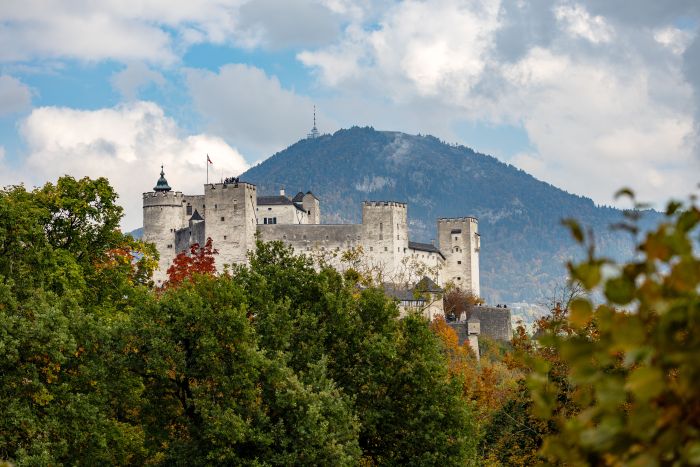
Hohensalzburg, one of the largest castles in Europe, above the Old Town
Licensed Austria Guides and What “Local Guide” Means
In Austria, tourist guiding is a regulated trade under § 108 of the Trade Regulation Act (GewO 1994), and only a guide authorised in Austria may lead commercial guided tours. The qualification is a state examination together with an entrepreneur’s examination, prepared in a course of at least 250 lessons, and the guide registers the trade with the district authority. Licensed guides are organised as the Austria Guides within the Austrian Economic Chamber (WKO). In Salzburg, a guide who has passed the examination receives an official badge and wears it visibly while guiding.
On booking platforms you will often see the words “local guide”. The term describes someone who lives in the city; it says nothing about the state examination. Some listings combine the two, for example a “licensed local guide”, while others offer a local host with no licence at all. A tour leader (Reiseleiter) who accompanies a travel group is a different trade and may not give guided tours. To check, ask the guide for the badge or the trade registration.
This matters in Salzburg because the Old Town is small and busy. A long-serving certified guide, former chair of the Salzburger Guide Service association, has described unlicensed “black guides” who lead oversized groups and block the narrow passages, and the city has stated that it has no legal basis to limit the size of groups. A licensed guide plans routes and group size around these bottlenecks.
How Booking Works in Salzburg
OfficialGuides is a platform where independent licensed guides list their services. You write directly to the guide who will lead your day, agree the route and the fee in the chat, and pay the guide on the terms you agree. The guide remains responsible for the service they provide.
English-Speaking Guides and Other Languages
The guides on this page work in English, and each guide’s listing shows any further languages. German is the everyday language of Salzburg, but an English-speaking guide also handles practical details: fortress and museum tickets, the DomQuartier opening days and the bus to Hellbrunn.
Private Tours in Salzburg: Types of Day
Old Town and Mozart
Getreidegasse, Mozart’s Birthplace, the Cathedral, Residenzplatz and St. Peter, all on foot.
Fortress and Palaces
Hohensalzburg by funicular, the DomQuartier state rooms, Mirabell and Hellbrunn.
Sound of Music
The film locations in the city and on its edge, from Mirabell Gardens to Leopoldskron and Hellbrunn.
Lakes and Mountains
Full days to Hallstatt and the Wolfgangsee, or across the border to Berchtesgaden and the Eagle’s Nest.
Sample Routes with a Private Guide
These routes are starting points. Your guide adjusts them to opening days, the season and the pace of your group.
Old Town Walk: Getreidegasse, Mozart and the Cathedral
The Historic Centre of the City of Salzburg has been a UNESCO World Heritage Site since 1996. From the Middle Ages to the 19th century Salzburg was a city-state ruled by prince-archbishops, and Italian architects gave the centre much of its Baroque form. The walk follows the narrow Getreidegasse to No. 9, where Mozart was born on 27 January 1756; the family lived on the third floor of the Hagenauer House for 26 years, and the museum shows his childhood violin, a clavichord, letters and portraits made in his lifetime. It continues to the Cathedral, Residenzplatz, the former residence of the prince-archbishops, and St. Peter’s Abbey, a Benedictine monastery founded in 696, with its cemetery.
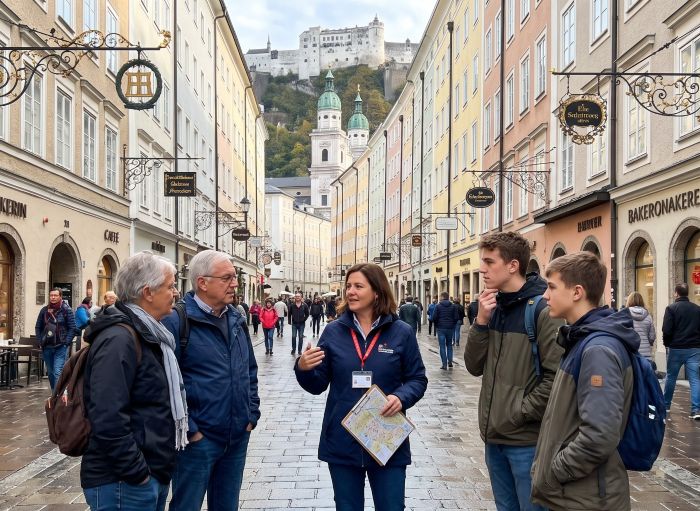
A guided walk on Getreidegasse, the street of Mozart’s Birthplace (ai illustrated)
Hohensalzburg Fortress and the DomQuartier
The funicular climbs to Hohensalzburg, where the ticket covers the courtyards, bastions, chapel, a panorama tour, the Fortress Museum, the Marionette Museum and the Prince’s chambers. Back in the Old Town, the DomQuartier links the state rooms of the Residenz, the Cathedral Museum, the St. Peter’s Museum and the organ gallery of the Cathedral in one circuit; the museum recommends at least an hour and a half. The DomQuartier is closed on Tuesdays except in July, August and from December to 6 January, and the Residenzgalerie is currently closed.
Mirabell, the Mozart Residence and Hellbrunn
Mirabell Palace was built in 1606 and is known for its gardens and Marble Hall. The Mozart Residence completes the Mozart story, and a combined ticket covers it together with the Birthplace. From late March to the start of November the route can end at Hellbrunn, reached by bus line 25 in about 25 minutes from the centre: the palace’s trick fountains take about 50 minutes and the palace exhibition about 30 minutes. In winter the trick fountains are closed.
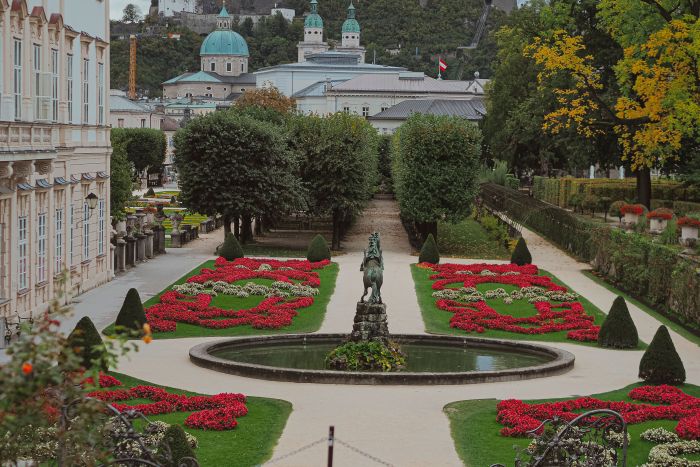
Mirabell Gardens, where the “Do-Re-Mi” scene was filmed
Sound of Music Locations
The film was shot in Salzburg from the spring of 1964 and released in 1965. In the city, “Do-Re-Mi” was filmed in the Mirabell Gardens, “I Have Confidence” on Residenzplatz, and the singing competition and “Edelweiss” in the Felsenreitschule. Leopoldskron provided the villa interiors and the lake where the children fall out of the boat, Frohnburg on Hellbrunner Allee the villa exterior, and the gazebo in the Hellbrunn gardens the scene of “Sixteen Going On Seventeen”. With more time, the route adds the parish church of Mondsee, where the wedding was filmed.
Day Trips from Salzburg: Hallstatt, the Wolfgangsee and the Eagle’s Nest
For day trips the guide charges the full-day guiding fee only; tickets and transport are paid separately, and you can ask the guide about a vehicle with a driver. Hallstatt and the Eagle’s Nest are often combined in one long day, and your guide can tell you whether the season and your pace allow it.
Hallstatt and the Wolfgangsee (Salzkammergut)
Hallstatt is part of the UNESCO World Heritage Site “Hallstatt-Dachstein / Salzkammergut Cultural Landscape”, where salt has been produced since prehistoric times. By public transport, bus 150 runs from Salzburg main station past the Fuschlsee and the Wolfgangsee to Bad Ischl, and from there two further buses reach Hallstatt in about 40–50 minutes. With a car the day can include St. Gilgen and St. Wolfgang on the Wolfgangsee and the church at Mondsee. The Hallein salt mine and Werfen, with Hohenwerfen Fortress seen in the “Do-Re-Mi” scene, are other options for a day out of the city.
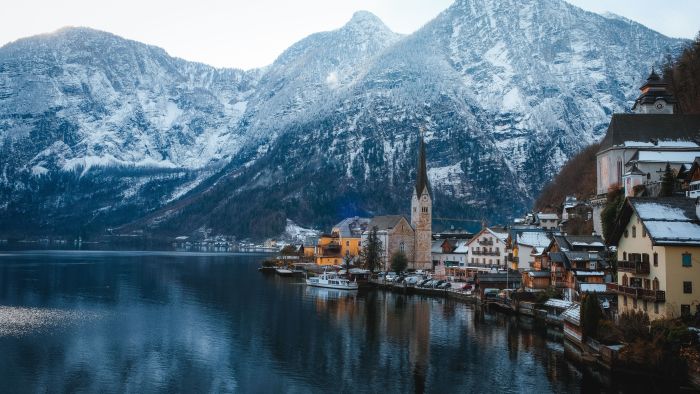
Hallstatt, part of the Salzkammergut World Heritage landscape
Berchtesgaden and the Eagle’s Nest
The Eagle’s Nest (Kehlsteinhaus) stands at 1,834 metres on the Kehlstein above Berchtesgaden, in Bavaria, Germany, reached by car on the A8. Special Kehlstein buses climb the mountain road, and the last stretch is a 124-metre tunnel and a glass lift that rises in about 41 seconds. The site usually opens from mid-May to the end of October and closes in winter because of snow, so plan this day for the warmer months.
OfficialGuides also lists licensed guides in Austria’s capital: see private tours in Vienna.
Guide with a Vehicle: Driver-Guides and Car Hire
For the Sound of Music route, the Salzkammergut and the Eagle’s Nest you need a vehicle; ask your guide about the options and the cost before you confirm. Some Salzburg guides also hold a separate licence for sightseeing by minivan and drive the group themselves, with up to eight passengers. Others work with a driver. The vehicle is priced separately from the guiding fee and depends on the group size and the distance. In the Old Town no vehicle is needed: the centre is visited on foot.
When to Visit: Festival Summer, Hellbrunn and Winter
The Salzburg Festival runs for about five weeks every summer, from late July to the end of August. It was founded in 1920 by Hugo von Hofmannsthal, Richard Strauss, Max Reinhardt, Alfred Roller and Franz Schalk, and each year Hofmannsthal’s play “Jedermann” is performed on Cathedral Square, in front of the Cathedral. Performances take place in the Großes Festspielhaus, the Haus für Mozart and the Felsenreitschule, a former riding school cut into the rock of the Mönchsberg. Book your guide early for these weeks.
Hellbrunn’s trick fountains open from late March to the start of November, and the Eagle’s Nest from about mid-May to the end of October. In winter the DomQuartier opens daily from December to 6 January, and Mozart’s Birthplace opens every day of the year, with shorter hours on 24 December and 1 January.
Getting There and Around
Two Railjet trains an hour connect Vienna and Salzburg; the fastest, the Railjet Xpress, takes 2 hours 25 minutes via St. Pölten and Linz. Munich is from 1 hour 40 minutes by train, and a direct hourly train links Salzburg main station with Vienna Airport. In the city, the Old Town and Mirabell are on foot, the fortress is reached by funicular or footpath, and Hellbrunn by bus 25. The city pass (Salzburg Card) includes free public transport and free or reduced entry at many sights; check which sights are covered before you buy it.
Visa and Entry
Austria is in the Schengen area, and the Eagle’s Nest day crosses into Germany, also a Schengen country. Entry requirements depend on your nationality; check them on the Austrian government’s official portal, oesterreich.gv.at (visa for Austria), before you travel.
Premium Days, Families and Festival Guests
For a premium day, combine a licensed guide with a private vehicle and a driver, and let the guide plan the timing of tickets and lunch. A full day can join the Old Town, the fortress by funicular and an afternoon at Hellbrunn or on the Sound of Music route. Festival guests can plan a morning walk with the guide and keep the evening for a performance. For families, the guide can choose the funicular instead of the footpath to the fortress and include the Marionette Museum; Hohensalzburg’s child tickets cover ages 6 to 14.
Prices: Guiding Fees and Tickets in Salzburg
Guiding fees in Salzburg vary from guide to guide; the figures below are typical ranges, and each guide confirms the exact fee in the chat. Fees are per group, not per person, and cover guiding only.
| Service | Typical guiding fee (per group) |
| Per hour | 80–120 € |
| Half day (3–4 hours) | 200–290 € |
| Full day in Salzburg | 350–450 € |
| Day trip: Hallstatt, Wolfgangsee or Eagle’s Nest (guiding only) | 350–450 € |
| Vehicle with driver | Ask the guide |
Published adult ticket prices for the main sights:
| Ticket | Adult |
| Hohensalzburg, basic ticket with funicular | 15.50 € |
| Hohensalzburg, all-inclusive ticket with funicular | 19.20 € |
| Mozart’s Birthplace | 18.00 € |
| Mozart’s Birthplace and Mozart Residence, combined | 25.00 € |
| DomQuartier, full access | 15.00 € |
| Hellbrunn trick fountains and palace exhibition | 16.50 € |
| City pass (Salzburg Card), 24 hours | 35–38 € (higher April–October) |
The Eagle’s Nest buses, the Hallstatt sights and the salt mines have their own tickets; your guide gives the current prices when you plan the day.
Frequently Asked Questions
How much does a private tour guide in Salzburg cost?
A licensed guide in Salzburg typically charges about 200–290 € for a half day of three to four hours and 350–450 € for a full day, per group. The hourly rate is around 80–120 €. Each guide sets their own fee, and tickets and transport are extra.
Is a “local guide” the same as a licensed guide in Salzburg?
No. “Local guide” only means that the person lives in the area; a licensed guide has passed the Austrian state examination. In Austria, guiding is a regulated trade, and licensed guides in Salzburg wear an official badge while guiding. Ask to see it if you are unsure.
Can we visit Hallstatt and the Eagle’s Nest in one day?
They are often combined in one long day by car between mid-May and October, when the Eagle’s Nest is open. The guide charges the full-day guiding fee; the vehicle and tickets are paid separately.
Can a guide take us to the Sound of Music locations?
Yes, a private half day covers the main locations: Mirabell Gardens, Residenzplatz, the Felsenreitschule, Leopoldskron, Frohnburg and the Hellbrunn gazebo. With a full day the route can continue to the church at Mondsee, where the wedding scene was filmed.
What is open for a guided walk in winter?
The Old Town walk works all year, Mozart’s Birthplace opens daily, and the DomQuartier opens every day from December to 6 January. The Hellbrunn trick fountains and the Eagle’s Nest close in winter.
What do licensed, certified and professional mean in guide listings?
Listings use several words, such as licensed, certified, official or professional guide; what counts in Austria is the state licence. A certified Austria Guide and a licensed guide both mean a guide who has passed the state examination, while “professional” on its own says nothing about it.
Plan Your Day with a Licensed Guide in Salzburg
Message a guide with your dates and group size to plan the Old Town, the fortress or a day trip.
Contact Us About Your Salzburg Trip
Send your dates, group size and the places you want to see, and we will reply by email.
Guiding fees and ticket prices on this page are indicative and may change; guides set and confirm their own fees. Read our terms of service and privacy policy.