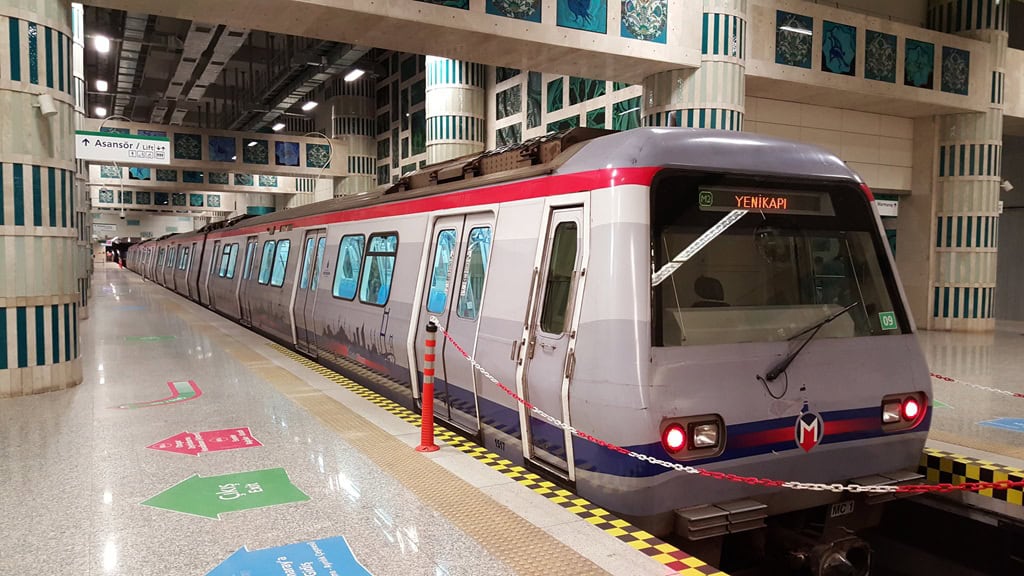
Getting around Istanbul is easier and cheaper than most first-time visitors expect. One contactless card covers the metro, tram, funicular, bus and the iconic cross-continental ferries. This guide explains how to pay, which lines tourists actually use, how to reach the main districts, and how to get in from both airports — with updated 2026 fares.
Jump to: English-speaking guides · The transport system · Cards & fares · Useful lines · Getting between districts · Cruise port (Galataport) · Airport transfers · Bridges & tunnels · Skip-the-line tickets · Practical tips · FAQ
Skip the queues at the busiest sights with a Hagia Sophia, Topkapi Palace & Basilica Cistern skip-the-line tickets.
Understanding Istanbul’s Public Transport System
Istanbul has a large, integrated network covering metro, tram, suburban rail, bus, ferry, funicular and cable car lines, plus electric shuttles on the Princes’ Islands. The real challenge is not complexity but scale: the city is split by the Bosphorus and the Golden Horn and built over many hills, so distances are long and a journey often needs one or two transfers.
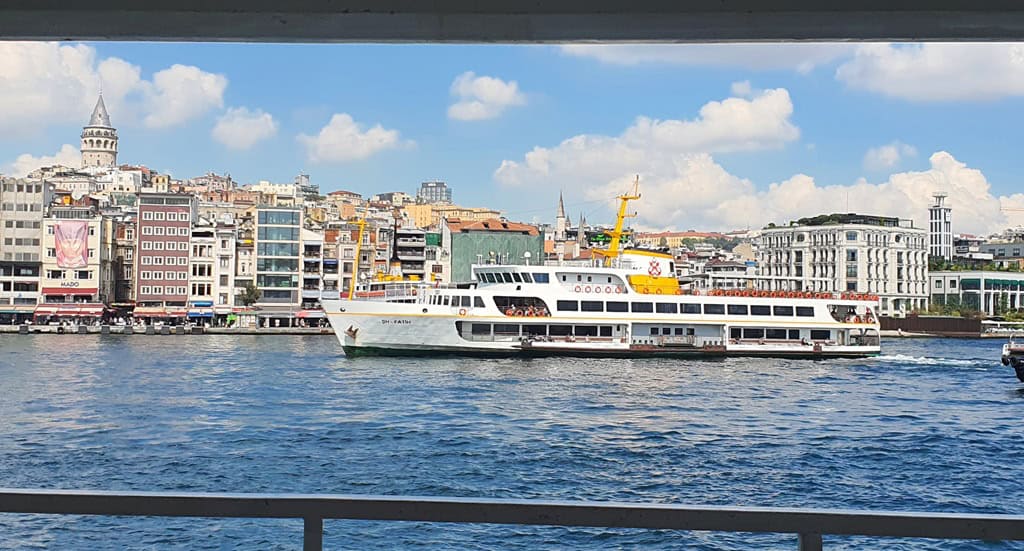
The good news for visitors: one payment method works across the entire network. You can use a personal İstanbulkart, a non-personal multi-ride card from the machines, or simply tap a contactless bank card at the gate. The card gives you the lowest fare and transfer discounts, so most travellers buy one on arrival.
Prefer an English-Speaking Licensed Guide in Istanbul?
Public transport is great for getting around, but the city’s layers — Roman, Byzantine and Ottoman — make far more sense with a licensed local guide who explains them in clear English.
Every guide on OfficialGuides.com is licensed by the Turkish Ministry of Culture and Tourism and speaks fluent English. Tell us your dates and interests using the form below and a licensed guide will contact you directly — no agencies, no middlemen.
REQUEST A PRIVATE TOUR GUIDE ↓
Most museums in Istanbul offer priority tickets for official tour guides, allowing you to enter quickly. To request a licensed guide, please provide your visit dates, number of people, preferred language and your mobile number with country code in the text field below.
Are you a licensed guide in Istanbul? Join OfficialGuides.com and connect directly with travellers — no middlemen. See how it works.
İstanbulkart, OnGeç & Contactless: How to Pay (2026 Fares)
The İstanbulkart is the main travel card and is valid on every public vehicle in the city — and even on municipal toilets. The blank card costs about 165 TL (≈ €3.40) from machines and kiosks, then you load credit on top. It is personalised in practice and can be blocked if tapped more than four times in a row, so it is not meant for sharing within a group.
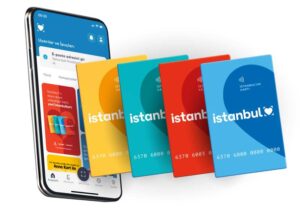
If you are travelling as a couple or family, the OnGeç (multi-ride) card from the ticket machines is often simpler. It carries no extra card fee, is not personalised, and can be passed between several people in succession. It charges a fixed fare per ride with no transfer discount, which suits visitors who change vehicles only occasionally. The machines sell it from 1 up to 10 rides — for example 3 rides for 170 TL (≈ €3.50), 5 rides for 250 TL (≈ €5.20) or 10 rides for 480 TL (≈ €10) — so you can match it to the length of your stay.
In a hurry, you can also tap a contactless credit or debit card directly at most metro, tram, bus and ferry gates. It is the most convenient option for short stays, though it gives no transfer discount and the exact charge depends on your bank’s exchange rate.
| 💳 Payment type | Personalised | Multi-user | Card cost | Fare per ride* | Transfer discount |
|---|---|---|---|---|---|
| 🟦 İstanbulkart | Yes (in practice) | No (max 4 taps) | ~165 TL (≈ €3.40) + credit | from 42 TL (≈ €0.90) | Yes |
| 🔟 OnGeç multi-ride card | No | Yes | No extra fee | 3 / 5 / 10 rides: 170 / 250 / 480 TL (≈ €3.50 / €5.20 / €10) | No |
| 🎫 Single-use ticket | No | Yes | — | 60 TL (≈ €1.25) | No |
| 💳 Contactless bank card | No | Yes | None | ≈ 42 TL (varies by bank) | No |
*Fares effective from 16 February 2026. With an İstanbulkart a single ride is 42 TL; transfers within about two hours are discounted (around 31 TL for the first transfer, then less). Marmaray and the airport metro lines charge distance-based fares that differ from the flat city fare. Prices are set in Turkish lira and the euro figures are approximate — always check the current fare on the machine or on the official transit site, metro.istanbul, before you pay.
Unlimited travel passes (1–15 days)
There are also fixed-period unlimited-ride passes aimed at tourists. They are convenient but rarely the cheapest option, because a normal day of sightseeing is only a handful of rides:
- 1-day: 795 TL (≈ €16.50)
- 3-day: 1,530 TL (≈ €32)
- 5-day: 3,110 TL (≈ €64)
- 7-day: 3,980 TL (≈ €82)
- 15-day: 5,980 TL (≈ €124)
For most visitors, a regular İstanbulkart topped up with credit works out far cheaper — these passes only pay off if you ride public transport very heavily every day.
Tip: top up your İstanbulkart with 200–300 TL at the airport so you have enough for the ride in plus a day or two of sightseeing, and avoid hunting for a top-up machine later.
Most Useful Tram, Metro, Funicular & Ferry Lines for Tourists
You do not need the whole network. These are the lines that connect almost every place a visitor wants to reach:
- T1 Tram: Sultanahmet → Eminönü → Karaköy → Kabataş.
Links the main historic sights with the ferry piers and the funicular — the single most useful line for tourists. - M2 Metro: Yenikapı → Vezneciler → Şişhane → Taksim → Şişli → Levent.
The fast way to the modern centre, İstiklal Street and the business districts. - F1 Funicular: Kabataş (ferry pier) ↔ Taksim.
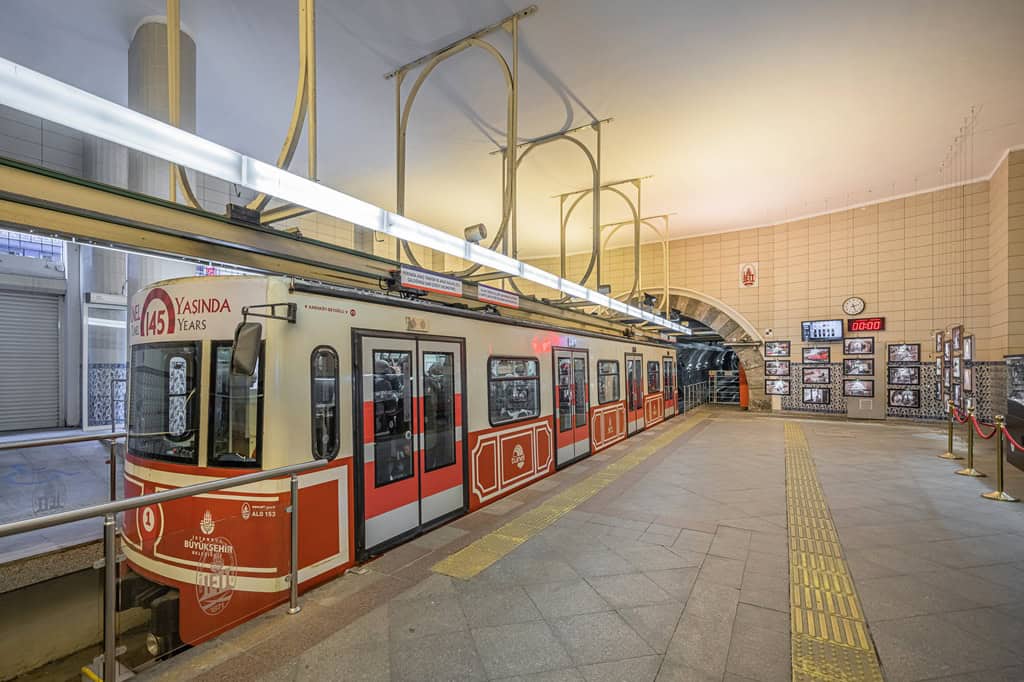
Skips a steep hill in about two minutes between the tram/ferry and Taksim Square. - F2 Funicular (Tünel): Karaköy ↔ Beyoğlu.
One of the world’s oldest underground railways, linking Galata with the bottom of İstiklal Street. - Marmaray: Halkalı ↔ Gebze, under the Bosphorus.
The quick rail link between the European and Asian sides (Sirkeci ↔ Üsküdar in minutes). - Ferries from Eminönü & Karaköy: to Kadıköy (every 20–30 min) and Üsküdar (every 10–20 min) on the Asian side — the most scenic way to cross.
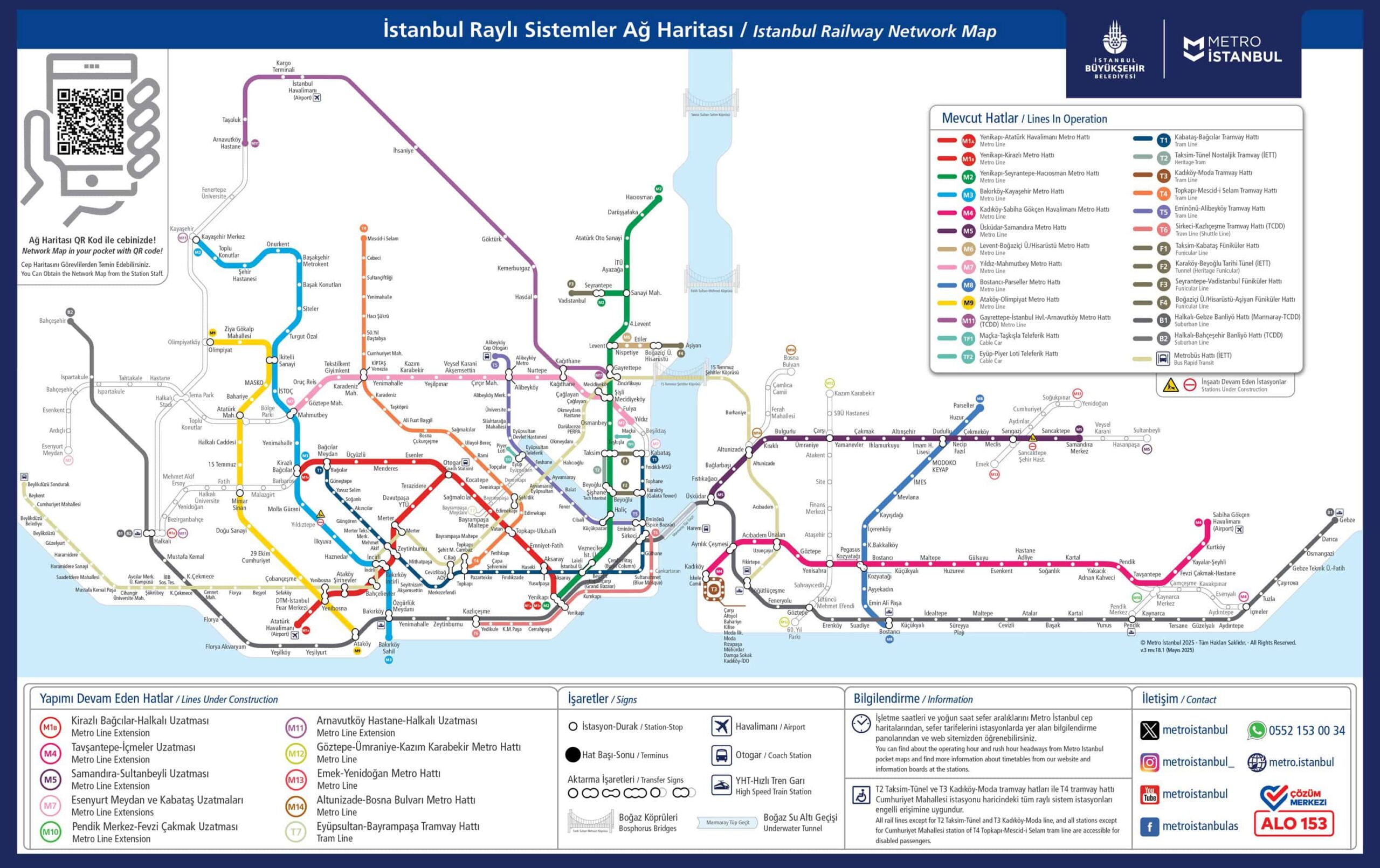
For the full, always up-to-date network map, timetables and live service updates, see the official operator’s site: metro.istanbul.
How to Get Between Istanbul’s Key Areas
Here are the simplest routes between the districts most visitors move between, starting from the Old City (Sultanahmet).
Sultanahmet (Old City) → Taksim / İstiklal Street / Galata
- By tram + funicular: take the T1 tram to Karaköy or Kabataş, then transfer to the F2 Tünel (for Galata) or the F1 funicular to Taksim Square.
- By metro: if you are near the M2 at Vezneciler station, ride it directly to Şişhane (Galata / İstiklal) or Taksim.
Sultanahmet (Old City) → Kadıköy & Üsküdar (Asian Side)
- To Kadıköy by ferry: take the T1 tram to Eminönü, Karaköy or Kabataş, then the ferry to Kadıköy (about 20–30 min).
- To Kadıköy by rail: take Marmaray from Sirkeci to Ayrılık Çeşmesi, then change to the M4 metro for Kadıköy.
- To Üsküdar by ferry: take the T1 tram to Eminönü, Karaköy or Kabataş, then the ferry to Üsküdar (about 10–20 min).
- To Üsküdar by rail: take Marmaray directly from Sirkeci to Üsküdar — the fastest option.

Old City → Golden Horn / Balat / Fener
- By tram: take the T1 tram to Eminönü, then transfer to the T5 tram line along the Golden Horn shore.
- By ferry: take the T1 tram to Karaköy and use a Golden Horn (Haliç) ferry when available — pretty, but seasonal and less frequent.
Taksim / İstiklal Street → Kadıköy
- By ferry: walk or take the Tünel down to Karaköy, or take the F1 funicular from Taksim to Kabataş, then the ferry to Kadıköy.
- By rail: M2 metro to Yenikapı, change to Marmaray toward Gebze, then change again at Ayrılık Çeşmesi for Kadıköy.
From the Cruise Port (Galataport) to the Old Town, Beyoğlu & Kadıköy
Most cruise ships dock at Galataport in Karaköy/Tophane, right on the European shore. There is no station called “Galataport” — the nearest tram stop is Tophane (about a 5-minute walk), with Karaköy just beyond it. From there the whole city is within easy reach.
Cruise port → Old Town (Sultanahmet)
Walk to the Tophane tram stop and take the T1 tram toward Bağcılar; get off at Sultanahmet for Hagia Sophia, the Blue Mosque, Topkapı Palace and the Basilica Cistern. The ride is about 10–15 minutes and needs no transfer. On foot it is roughly 30 minutes across the Galata Bridge.
Cruise port → Beyoğlu (Galata, İstiklal, Taksim)
This side is largely walkable: Galata Tower is about a 15-minute uphill walk. To save the climb, take the historic F2 Tünel funicular from Karaköy up to Beyoğlu, then walk along İstiklal Street to Taksim. The nearest metro is the M2 at Şişhane (about 1.2 km away).
Cruise port → Kadıköy (Asian Side)
Walk to the Karaköy ferry pier and take the ferry to Kadıköy (about 20–25 minutes) — the most scenic and relaxed way to reach the lively cafés and markets of the Asian side.
With a short port stop, two of the most enjoyable add-ons start right by the water:
- Bosphorus Dinner Cruise with Turkish dance shows + private table
- Bosphorus Sunset Yacht Cruise with snacks
Getting To and From Istanbul’s Airports
Istanbul has two airports on opposite sides of the city. Know which one you are flying into, because the routes are completely different.
From Istanbul Airport (IST) — European side
- By metro (cheapest): take the M11 line from the airport to Gayrettepe (about 30 minutes, every 8–10 min, roughly 06:00–00:00). The airport metro has its own distance-based fare of around 42–53 TL. At Gayrettepe change to the M2 metro for Taksim, İstiklal and Yenikapı. For the Old City, ride M2 to Vezneciler and walk to the T1 tram for Sultanahmet. Total time to the centre is about 45–75 minutes.
- By HAVAIST shuttle: direct, comfortable coaches run 24/7 to Taksim, Sultanahmet and other hubs. Expect roughly 300–355 TL (≈ €6–7.50) to Taksim and about 60–90 minutes depending on traffic. This is the only public option for arrivals after the metro stops.
- By taxi or private transfer: the airport is about 50 km from the centre. A metered taxi is the convenient door-to-door choice; a pre-booked private transfer in a Vito-class van removes the price uncertainty.
From Sabiha Gökçen Airport (SAW) — Asian side
- By metro (best for the Asian side): the M4 line runs directly from inside the terminal to Kadıköy in about 52 minutes for 42 TL (≈ €0.90), every few minutes at peak times, roughly 06:00–midnight (24 hours on Friday and Saturday nights). For the European side, change to Marmaray at Ayrılık Çeşmesi.
- By HAVABUS shuttle: a direct coach to Taksim costs about 440 TL (≈ €9) and takes around 90 minutes — no transfers, good with heavy luggage.
- By taxi or private transfer: SAW is 40–55 km from the centre and the fare varies with the route (First Bridge, Second Bridge or the Avrasya Tunnel, each with its own toll). A metered taxi to Taksim typically runs into four figures in lira, so a fixed-price private transfer is often the calmer choice.
Taxi tip: Istanbul taxis are metered (2026: about 65 TL to start, ~44 TL per km, with a minimum fare). Always insist on the meter (“taksimetre”), or agree a price before loading your bags.
Bridges and Tunnels of Istanbul
Istanbul has built some remarkable engineering to beat its own geography. Of the three suspension bridges over the Bosphorus, the northernmost is among the widest in the world and is the first to carry a railway line across the strait.
Two tunnels run beneath the sea between the continents: one carries the Marmaray rail line, the other carries road traffic — both are among the deepest immersed tunnels of their kind anywhere. On the surface, a dozen road tunnels totalling around 145 kilometres help keep traffic moving across the hills. Together they make crossing between Europe and Asia a matter of minutes rather than hours.
Save Time at Istanbul’s Top Sights: Skip-the-Line Tickets
Public transport gets you to the door, but the queues at the major monuments can swallow an hour or more. These skip-the-line tickets let you walk straight in:
- Hagia Sophia: skip-the-line ticket
- Topkapı Palace: skip-the-line ticket + audio guide
- Basilica Cistern: skip-the-line ticket + audio guide
- Dolmabahçe Palace: skip-the-line ticket + audio guide
- Whirling Dervishes show
Practical Tips for Using Istanbul Public Transport
- Buy your card first. Pick up an İstanbulkart from a machine at the airport or any metro station before your first ride. Make sure it is a genuine İstanbulkart, not a single-line card that only works on the airport metro.
- Tap on every vehicle. You pay per vehicle, not per distance, so scan again each time you change line — including ferries and funiculars.
- Avoid rush hour with luggage. Trams and the M2 are packed roughly 08:00–10:00 and 17:00–19:30. Ferries are calmer and far more scenic.
- Use the ferries on purpose. The Eminönü–Kadıköy and Karaköy–Üsküdar crossings are the cheapest Bosphorus “cruise” you will ever take.
- Download a route app. Moovit and Citymapper both cover Istanbul and show live transfers in English.
- Keep small change for the toilet. Your İstanbulkart also pays at municipal toilets across the city.
Frequently Asked Questions
Do I need an İstanbulkart as a tourist?
It is the cheapest and easiest option, and it works on every metro, tram, bus, ferry and funicular. If you are staying only a day or two, tapping a contactless bank card also works, though it costs a little more and gives no transfer discount.
How much is a single ride in Istanbul in 2026?
From 16 February 2026, a single ride with an İstanbulkart is 42 TL (about €0.90). Transfers within roughly two hours are discounted. A single-use ticket from the machine is 60 TL, and a 10-ride OnGeç card is 480 TL.
Can several people share one card?
Not the İstanbulkart — it blocks after four consecutive taps. For a couple or family, buy a non-personal OnGeç multi-ride card or tap separate contactless bank cards.
What is the cheapest way from Istanbul Airport (IST) to the city centre?
The M11 metro to Gayrettepe (about 42–53 TL), then a transfer to the M2 metro. Total time to Taksim is around 45–60 minutes. After the metro closes around midnight, the 24-hour HAVAIST coach is the public alternative.
How do I get from Sabiha Gökçen Airport (SAW) to the city?
For the Asian side, the M4 metro runs from the terminal to Kadıköy in about 52 minutes for 42 TL. For the European side, take the HAVABUS coach to Taksim (about 440 TL, ~90 minutes) or change from M4 to Marmaray at Ayrılık Çeşmesi.
Is public transport in Istanbul safe for tourists?
Yes. The metro, tram and ferries are clean, frequent and widely used by locals and visitors alike. As anywhere busy, keep an eye on your belongings in crowded carriages and at major interchanges.
Can I cross between Europe and Asia on public transport?
Yes — and it is one of the highlights. Take a ferry from Eminönü or Karaköy, or the Marmaray rail line under the Bosphorus, to reach the Asian side in minutes.
This page is also available in: العربية · 简体中文 · Čeština · Nederlands · Français · Deutsch · Ελληνικα · Magyar · Italiano · 日本語 · 한국어 · polski · Português · Română · Русский · Español · Svenska