Last Updated on 04/09/2026 by OfficialGuides Editorial Team
Acropolis at a Glance
The Acropolis of Athens is a limestone hilltop fortress that has watched over the city for more than 3,000 years. What you see today — the Parthenon, the Erechtheion, the Temple of Athena Nike and the monumental Propylaea gateway — was mostly built during the 5th century BCE under the leadership of Pericles. Around 3 million people visit every year, and with good reason: there is no other place where you can stand among the actual ruins of classical Greek civilization while looking out over a modern European capital. The site has been a UNESCO World Heritage Site since 1987.
Planning ahead makes all the difference. You can ➤ reserve your Acropolis timed-entry ticket online to lock in your preferred time slot and avoid the ticket queue. Or — better still — you can ➤ visit the Acropolis with a licensed private tour guide who will reserve your tickets in advance, meet you at the entrance, and walk you straight in while bringing the stones and columns to life with stories no sign or audio guide can match. Licensed guides in Athens routinely pre-book tickets for their guests, which means you skip both the ticket queue and the general entry line.
What Is the Acropolis of Athens?
The word “acropolis” simply means “high city” in Greek, and many ancient Greek cities had one. But when people say “the Acropolis,” they mean this one — the flat-topped rock in central Athens that rises 157 meters above sea level. The earliest traces of human activity here go back to the Neolithic period, roughly 4,000 years before the classical temples were built. By the 8th century BCE, the hill had become a sacred precinct dedicated to Athena, the city’s patron goddess.
The buildings visible today were constructed between roughly 447 and 406 BCE during what historians call the Golden Age of Athens. Pericles directed the project; Phidias oversaw the sculptures; Ictinus and Callicrates designed the Parthenon. The site survived conversion into a Christian church, then a mosque, then a Venetian ammunition dump that exploded in 1687 — blowing out much of the Parthenon’s centre. Restoration work has continued since Greek independence in the 1830s and is still ongoing.
One common point of confusion: the Acropolis and the Parthenon are not the same thing. The Acropolis is the entire hilltop complex of ruins and slopes. The Parthenon is one specific temple — the largest — sitting at the top.
What to See at the Acropolis
The archaeological site covers about 3 hectares and contains several distinct structures spread across the summit and slopes. Here are the main ones, roughly in the order you will encounter them walking up from the western entrance.
Propylaea — The Monumental Entrance
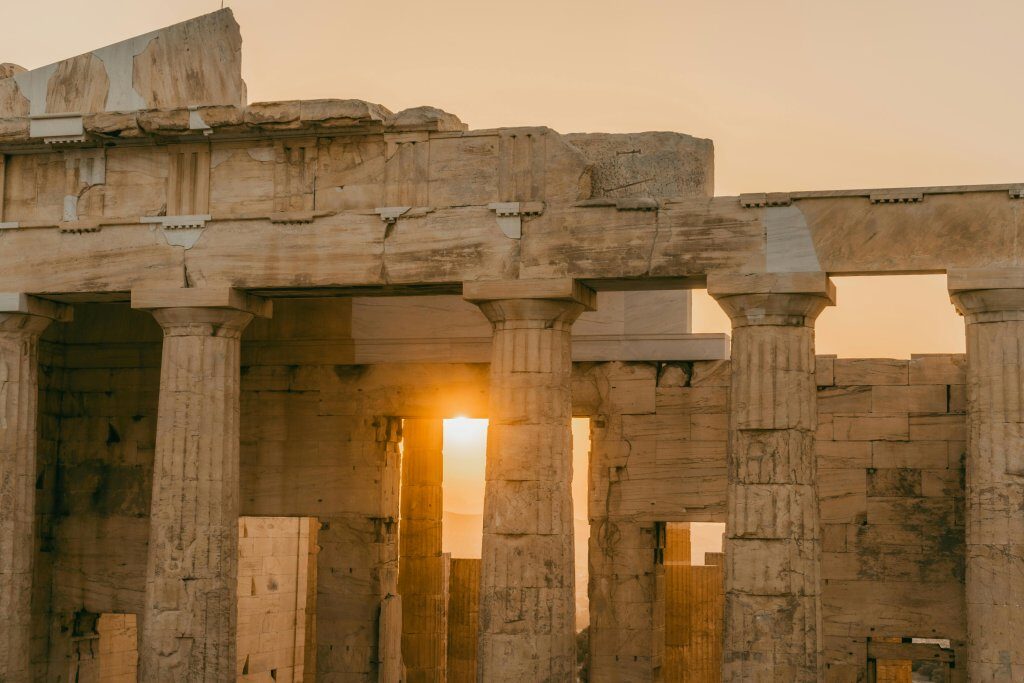
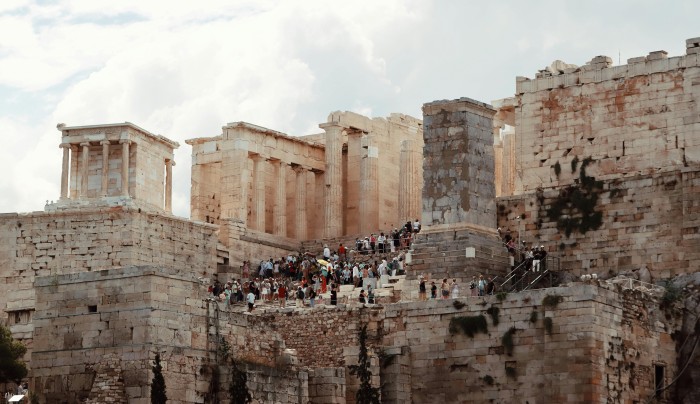
This is the grand marble gateway you pass through to reach the top. Designed by the architect Mnesicles and built between 437 and 432 BCE, the Propylaea features both Doric and Ionic columns. As you walk through it, you get your first framed view of the Parthenon ahead — a deliberate piece of ancient stagecraft that still works today.
Temple of Athena Nike
A small but elegant Ionic temple perched on a bastion to the right of the Propylaea. It was built around 420 BCE to celebrate Athenian military victories. The frieze once depicted battle scenes; fragments are now in the Acropolis Museum.
The Parthenon
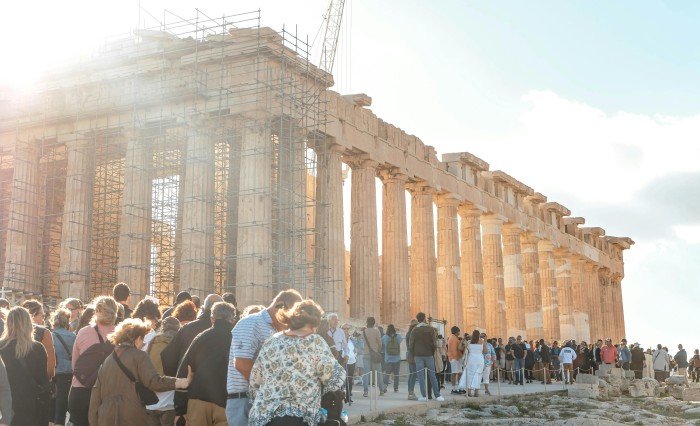
The largest Doric temple ever completed in Greece, built between 447 and 438 BCE. It was dedicated to Athena Parthenos (“Athena the Virgin”) and once housed a 12-meter gold-and-ivory statue of the goddess by Phidias — long since lost. You cannot enter the Parthenon, but you can walk around its full perimeter. Expect to see scaffolding: conservation teams have been carefully restoring sections since the 1970s, replacing earlier iron clamps that were causing damage.
Erechtheion and the Caryatids
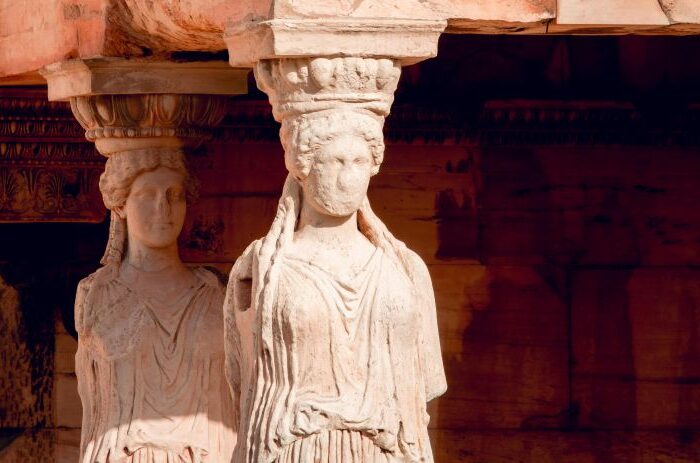
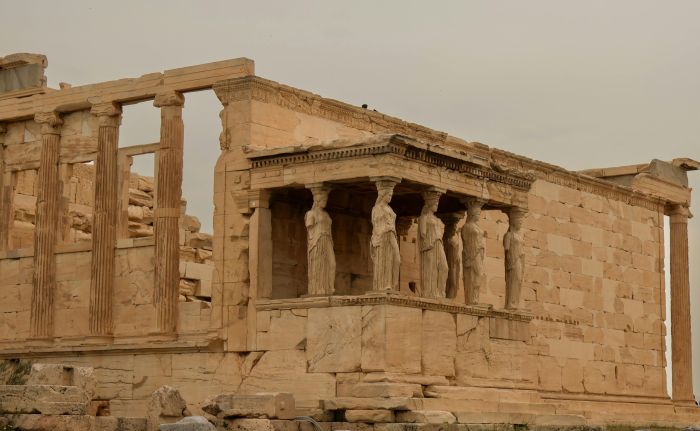
Sitting north of the Parthenon, the Erechtheion is an unusual temple with an asymmetric layout. It housed several cults, including those of Athena and Poseidon. The star attraction is the Porch of the Caryatids — six female figures used as supporting columns. The ones you see on the hill are replicas; five of the originals are displayed inside the Acropolis Museum, and the sixth is in the British Museum in London.
Odeon of Herodes Atticus
At the foot of the south slope sits this beautifully preserved Roman theater, built in 161 AD. With 5,000 seats carved into the hillside, it still hosts live performances during the Athens Epidaurus Festival every summer (May to October). You can see the theater from above as you walk the Acropolis, but entry is only possible during scheduled events — check the festival programme separately.
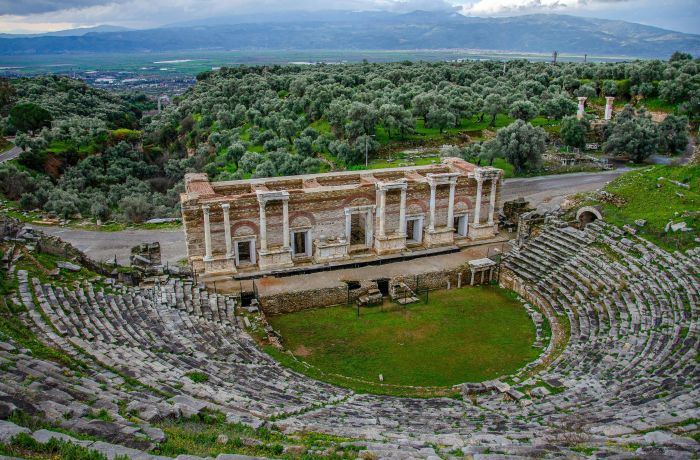
Theatre of Dionysus
Located on the south slope, this is where Greek tragedy was born. Plays by Aeschylus, Sophocles, Euripides and Aristophanes were first performed here for audiences of up to 17,000. What remains today are mostly Roman-era stone seats, but standing here still feels significant — this is where Western theater began.
Acropolis Ticket Prices
A standard adult ticket to the Acropolis costs €30, valid year-round. This gives you access to the hilltop site and the north and south slopes, including the Theatre of Dionysus. There is no longer a seasonal price difference — the old reduced winter rate was discontinued.
Reduced and free admission:
- EU citizens under 25: Free (show valid ID at the entrance)
- Non-EU visitors under 18: Free (with passport or ID)
- EU citizens 65+: Reduced rate available
Free entry days: March 6 (Melina Mercouri Day), April 18 (International Monuments Day), May 18 (International Museum Day), last weekend of September (European Heritage Days), October 28 (Oxi Day), and the first and third Sunday of each month from November through March. Expect larger crowds on these dates.
You can buy tickets at the official Hellenic Heritage ticketing site. Tickets are also available through trusted resellers like Tiqets, which offer digital companion guides and, in many cases, more flexible cancellation policies than the official site — useful if your travel plans might change.
Timed entry is mandatory. Tickets are issued in 2-hour time slots. You must enter within your designated window (up to 15 minutes before or after your slot). There is a daily visitor cap of approximately 20,000 people, so booking a few days in advance is strongly recommended during peak season.
Acropolis Opening Hours
| Season | Dates | Hours | Last Entry |
|---|---|---|---|
| Summer | April 1 – August 31 | 08:00 – 20:00 | 19:30 |
| Early autumn | September 1 – 15 | 08:00 – 19:30 | 19:00 |
| Late autumn | Sep 16 – Oct 31 | 08:00 – 19:00 (gradual reduction) | 18:30 |
| Winter | November 1 – March 31 | 08:00 – 17:00 | 16:30 |
Closed days: January 1, March 25, May 1, Easter Sunday, December 25 and 26.
Heat closures: When temperatures exceed 40°C, the site may close from roughly 1 PM to 5 PM. This happened several times during the summers of 2024 and 2025. Always check the Hellenic Ministry of Culture website or local news before a summer midday visit.
How to Get to the Acropolis
The Acropolis sits in the heart of Athens, about a 15-minute walk south of Syntagma Square. Public transport is the easiest way to get there.
Metro is the fastest option. Akropoli station on the M2 red line drops you about 5 minutes’ walk from the south entrance. Monastiraki station (M1 green / M3 blue lines) is roughly 10 minutes on foot, and Thissio station (M1 green line) is about 15 minutes away. A single metro ticket costs €1.20 and is valid for 90 minutes across all public transport.
Bus routes 230, 035, 040, 550 and A2 all stop within walking distance. From the airport (35 km away), a taxi takes about 45 minutes and costs roughly €40 on a fixed-rate meter. There is no dedicated parking at the Acropolis, but several paid garages operate in the Plaka and Psyri areas nearby.
How to Visit the Acropolis — Practical Tips
Allow 2 to 3 hours for the archaeological site alone. If you add the Acropolis Museum (highly recommended), plan a full half-day. Some visitors try to squeeze both into one session, but they are better enjoyed separately — your legs and your attention span will thank you.
Entrances: There are two. The main western entrance near Theorias Street is where most visitors arrive — and where the longest queues form. The south entrance, at the junction of Dionysiou Areopagitou and Thrasyllou streets, is closer to the Acropolis Museum and usually less crowded. Both entrances have ticket offices.
Route tip: Head straight for the summit first, especially in warmer months. See the Parthenon and Erechtheion while it is cooler and quieter, then work your way down through the slopes and theaters.
Terrain and stairs: The paths are uneven, steep in places, and paved with polished marble that gets slippery when wet. There are stone steps at several points. This is not a flat museum visit — it is a proper hillside climb. Wear closed-toe shoes with rubber soles.
Sun and shade: There is virtually no shade anywhere on the summit. In summer, temperatures on the exposed rock can feel 5–10°C hotter than the city below. Bring water (there are refill points near the entrance), sunscreen, and a hat.
One-time entry: Your ticket is valid for a single entry. Once you exit through the gate, you cannot re-enter with the same ticket — plan your visit accordingly.

Best Time to Visit the Acropolis
The best months are April, May, September and October. Temperatures are comfortable (18–25°C), the light is warm, and the crowds are manageable compared to the summer peak.
The best time of day is 8:00 AM when the gates open. You will have noticeably fewer people around you and cooler temperatures. The second-best window is late afternoon — roughly 2 hours before closing — when the light turns golden and many day-trippers have already left.
Avoid if you can: July and August between 10 AM and 3 PM. Temperatures regularly reach 35–40°C and the exposed hilltop intensifies the heat. Cruise ship passengers typically arrive at the Acropolis between 9 and 11 AM, making that window particularly congested.
If you are visiting in winter, the site is much quieter and ticket prices may be lower, but daylight hours are shorter and rain makes the marble paths treacherous. Bring shoes with good grip.
How to Skip the Line at the Acropolis
Since the introduction of timed-entry tickets, the old multi-hour queues have shrunk — but waits of 20 to 40 minutes still happen during peak season, especially at the main western entrance around mid-morning.
Three strategies that work:
1. Book your timed-entry ticket online. This is the simplest step. An online ticket lets you walk past the ticket queue entirely and go straight to the entrance scanner.
2. Use the south entrance. Most visitors default to the western gate. The south entrance near the Acropolis Museum sees a fraction of the foot traffic and puts you right next to the Theatre of Dionysus.
3. Visit with a licensed private guide. This is the most seamless option. Licensed guides in Athens pre-book tickets for their guests before the visit date. On the day, your guide meets you at the entrance with everything arranged — no queuing at all. You walk in at your reserved time and start the tour immediately. Beyond logistics, a good guide turns scattered ruins into a coherent story: you will understand why the Parthenon columns lean inward, what the Caryatids actually symbolize, and where Socrates might have argued with his students on the slopes below. Browse licensed private tour guides in Athens on OfficialGuides and let your guide handle the logistics while you focus on the experience.
The Acropolis Museum
The Acropolis Museum sits about 300 meters south of the Parthenon, directly across from the south entrance. Opened in 2009 and designed by architect Bernard Tschumi, it houses over 4,000 artifacts excavated from the Acropolis and its slopes.
The museum requires a separate ticket — it is not included with your Acropolis site ticket. You can buy tickets at the museum desk, through the museum’s e-ticketing service, or via Tiqets. Check the Acropolis Museum official website for current prices and hours.
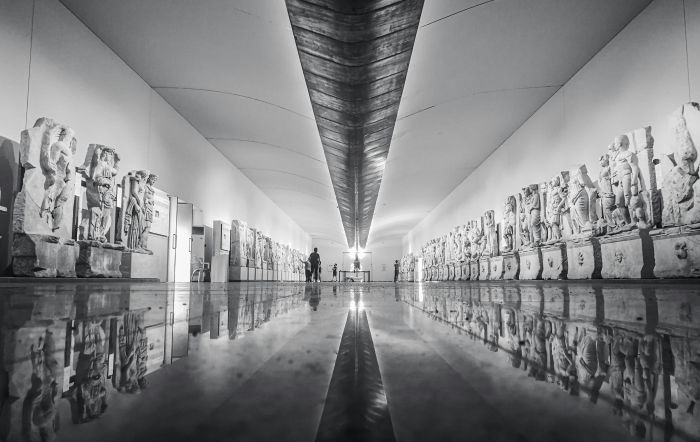
Three things worth knowing before you go in. First, the top-floor Parthenon Gallery positions the original frieze fragments exactly as they would have appeared on the temple, with floor-to-ceiling windows framing the actual Parthenon outside — the effect is remarkable. Second, glass floors on the ground level let you look down into an excavated ancient Athenian neighborhood beneath the building. Third, photography is not allowed in the Archaic Gallery to protect sculptures that still retain traces of their original paint.
Accessibility at the Acropolis
An elevator is available on the north side of the Acropolis for visitors with mobility impairments, parents with multiple young children, and their companions. It takes you up to the plateau near the Erechtheion. From there, a paved path leads to the Parthenon area. There is a wheelchair-accessible restroom near the end of this route.
The north slope has a dedicated entrance for visitors with disabilities, located just north of the main gate. The Acropolis Museum is fully wheelchair accessible with ramps, elevators and accessible restrooms throughout.
What to See Near the Acropolis
Several major archaeological sites and neighborhoods are within easy walking distance:
Ancient Agora (10–12 minutes on foot): The political and commercial heart of ancient Athens, with the remarkably well-preserved Temple of Hephaestus. Mostly flat terrain — a welcome change after the Acropolis climb.
Roman Agora and Hadrian’s Library (8–10 minutes): The administrative centre of Athens during the Roman period. Compact and easy to visit.
Temple of Olympian Zeus (500 meters east): Fifteen surviving columns of what was once the largest temple in Greece, completed by Emperor Hadrian in 131 AD.
Areopagus Hill (2 minutes from the main entrance): A bare rocky outcrop just below the Acropolis where the ancient Athenian council met. Free to visit, and one of the best sunset spots in Athens.
The neighborhoods of Plaka, Monastiraki, Thissio and Psyri wrap around the base of the Acropolis and are worth exploring for their mix of traditional tavernas, street markets, and pedestrian promenades.
Frequently Asked Questions
What is the difference between the Acropolis and the Parthenon?
The Acropolis is the entire hilltop archaeological complex, covering about 3 hectares. The Parthenon is one specific temple within that complex — the largest and most famous one, dedicated to the goddess Athena. When you buy an Acropolis ticket, you get access to the Parthenon and all other structures on the hill and its slopes.
How much does it cost to visit the Acropolis?
A standard adult ticket costs €30, valid year-round with timed entry. EU citizens under 25 and non-EU visitors under 18 enter free. Reduced rates are available for EU citizens over 65. The site also has several free-entry days throughout the year, mostly between November and March.
Can you go inside the Parthenon?
No. Visitors can walk around the full perimeter of the Parthenon but cannot enter the temple itself. This has been the case for decades due to ongoing conservation work and the fragile state of the interior structures. Many of the original sculptures and friezes have been moved to the Acropolis Museum.
How long does it take to visit the Acropolis?
Most visitors spend 2 to 3 hours on the archaeological site. If you also visit the Acropolis Museum (recommended), add another 1.5 to 2 hours. A guided tour typically covers the site in about 2 hours, with explanations at each major monument.
Is there an elevator at the Acropolis?
Yes. An elevator on the north side of the hill is available for visitors with mobility impairments, as well as parents attending two or more young children on their own. It takes you to the plateau near the Erechtheion. A separate wheelchair-accessible entrance is located north of the main gate.
Are there stairs at the Acropolis? How steep is it?
Yes, there are stone steps at several points along the route from the entrance to the summit. The uphill walk takes 15 to 20 minutes. The paths are uneven and paved with polished marble, which can be slippery when wet. It is not extremely steep, but it is a genuine hillside climb — wear comfortable, non-slip shoes.
Is the Acropolis Museum included in the Acropolis ticket?
No. The Acropolis Museum has its own separate ticket and its own opening hours. You can buy museum tickets at the museum entrance desk, through the museum’s e-ticketing service, or via reseller platforms. The two sites are about 300 meters apart.
When is the Acropolis free to visit?
Free entry days include March 6, April 18, May 18, the last weekend of September, October 28, and the first and third Sunday of each month from November through March. These days tend to be significantly more crowded than regular days — arrive early if you plan to visit on a free day.
Does the Acropolis close in extreme heat?
Yes. When temperatures exceed approximately 40°C, the Ministry of Culture may close the site during the hottest part of the day, typically from 1 PM to 5 PM. This happened multiple times during the summers of 2024 and 2025. Check local news or the official Ministry website before a midday visit in July or August.
Is a guided tour of the Acropolis worth it?
If you have any interest in understanding what you are looking at — rather than just photographing marble columns — then yes. The Acropolis has no information panels on the site itself, so without a guide or at least an audio guide, the ruins can feel like impressive but unexplained stones. A licensed guide will explain the optical illusions built into the Parthenon’s columns, tell you who the Caryatids really represent, and point out details you would walk right past on your own. A private guided tour of the Acropolis also means pre-booked tickets, a pace that suits you, and the freedom to ask questions as they come up.
Explore the Acropolis with a Licensed Private Guide
Skip the ticket queues, set your own pace, and hear the stories behind every column and carving. A private licensed guide in Athens handles your ticket reservations, meets you at the entrance, and turns 2,500 years of history into something vivid and personal.
This page is also available in: العربية · 简体中文 · Čeština · Nederlands · Français · Deutsch · Ελληνικα · Magyar · Italiano · 日本語 · 한국어 · polski · Português · Română · Русский · Español · Svenska · Türkçe