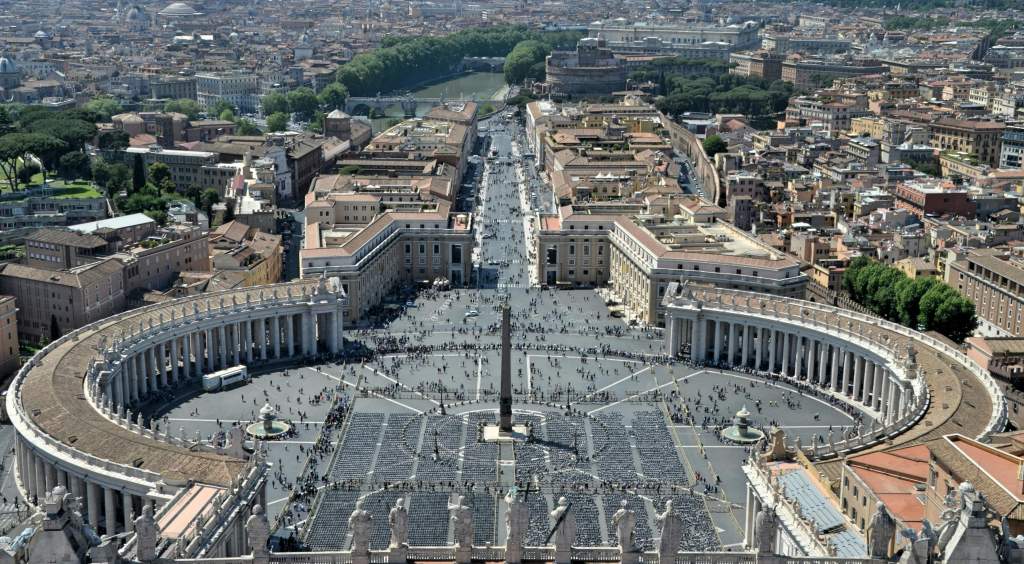
Last Updated on 14/10/2026
Opening hours, what your ticket actually covers, how to get there, and how to plan a Vatican visit that doesn’t get eaten by queues.
Planning a Vatican visit? The Vatican Museums draw around 30,000 visitors a day, and the on-site queue regularly runs two to three hours in peak season. Almost every problem visitors run into — the queue, the closed Basilica, the missed Sistine Chapel — comes down to timing rather than which ticket they bought.
On this page you’ll find: what your ticket includes (and what it doesn’t), the Sistine Chapel and its rules, St. Peter’s Basilica, opening hours and the best time to visit, how to get to the Vatican, arriving from a cruise (Civitavecchia), ticket prices and options, and how to find a licensed private guide in Rome.
OfficialGuides is a marketplace of licensed independent tour guides — not the official Vatican ticket office, which is museivaticanitickets.com. The two ticket links on this page are affiliate links to an authorised reseller; your price is unaffected.

What Does a Vatican Ticket Actually Include?
A standard Vatican Museums ticket covers entry to all the permanent galleries — the Pio-Clementino Museum, the Raphael Rooms, the Gallery of Maps, and, crucially, the Sistine Chapel. You cannot enter the Sistine Chapel separately; it is only accessible through the museum complex, and every ticket includes it as the final stop on the route.
What the ticket does not automatically include is St. Peter’s Basilica. The Basilica has its own free entrance via St. Peter’s Square, a separate building about a 10-minute walk from the museum exit. Some guided tours include a private passage that connects the Sistine Chapel directly to the Basilica — something independent visitors don’t have access to.
Also sold separately: the Vatican Gardens, the Necropolis beneath St. Peter’s (where early Christian burials are found), and the Papal Apartments. These require individual advance bookings and often sell out months ahead.
One practical note that catches people out: no Vatican ticket allows re-entry. Once you exit the museums, you cannot go back in on the same ticket. The full self-guided circuit covers about 7 kilometres of galleries, so most visitors sensibly focus on the highlights — the Egyptian Museum, the Pio-Clementino sculptures, the Raphael Rooms, the Gallery of Maps, and the Sistine Chapel — rather than attempting everything.
The Sistine Chapel — What to Expect
The Sistine Chapel is the artistic and spiritual centrepiece of any Vatican visit. Michelangelo painted the ceiling between 1508 and 1512, commissioned by Pope Julius II, and later added The Last Judgement on the altar wall between 1536 and 1541.
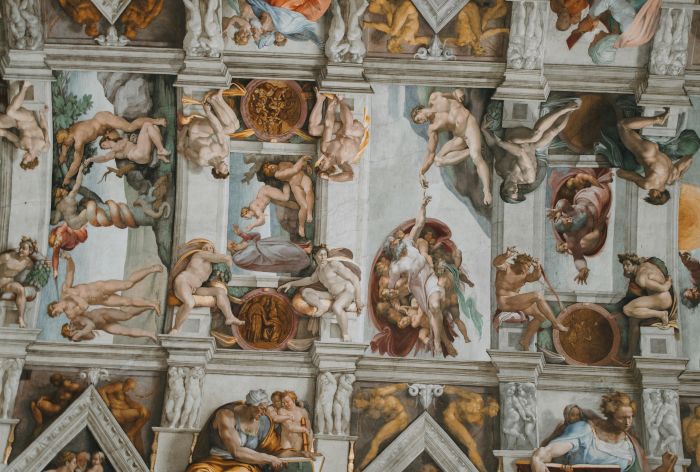
A few things worth knowing before you go:
- 📷 No photography. This is strictly enforced. Guards will ask you to delete images if you’re caught — no exceptions, even without flash.
- 🔇 Silence is required. The chapel is an active place of worship, and staff regularly remind visitors to keep quiet. It can feel abrupt, but it’s worth respecting.
- 👗 Dress code applies. Shoulders and knees must be covered. This is enforced at the entrance to the entire Vatican Museums complex, not just the chapel.
- ⏰ Timing matters. The chapel is least crowded early in the morning or in the late afternoon, roughly an hour before closing.
Most visitors spend 15 to 30 minutes inside, depending on crowds. Because speaking isn’t permitted in the chapel, anyone explaining the frescoes has to do it beforehand — which is why guided groups stop in the corridors just outside to run through the iconography before walking in. If you’re visiting independently, reading up on the layout in advance does the same job.
St. Peter’s Basilica — Free Entry, But Plan Ahead
Entering St. Peter’s Basilica costs nothing. The queue, however, is not free of your time — on a busy summer morning the security line outside can stretch 45 to 60 minutes or more. The Basilica is open to all visitors regardless of religion, but it closes for official papal events; on Wednesday mornings it shuts for the Papal Audience and reopens around 12:30 pm, so check the Vatican’s calendar before fixing your day.
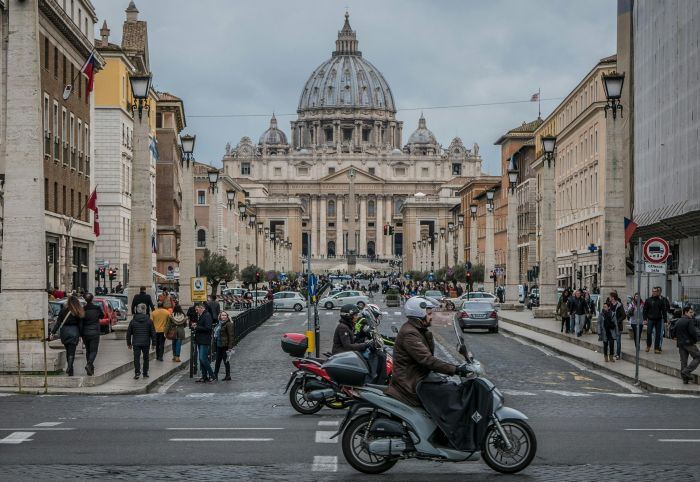
Inside, the scale is genuinely staggering. St. Peter’s is the world’s largest church — its nave runs nearly 220 metres — and the dome, designed by Michelangelo and completed after his death, rises 136 metres above the floor. Key highlights include:
- 🕊️ Michelangelo’s Pietà (1499) — carved when he was 24, now behind protective glass near the entrance
- ⚓ Bernini’s bronze baldachin — the 29-metre canopy over the papal altar, directly above St. Peter’s tomb
- ⛪ The dome climb — 551 steps, or 320 with the lift partway, for panoramic views over Rome; a separate ticket is required, bought at the Basilica
- 🪦 The Vatican Grottoes — papal tombs beneath the basilica floor, included with free entry
If you’re doing both the Museums and the Basilica in one day, the order matters. Museums first, Basilica second, using the internal passage from the Sistine Chapel where your tour includes it — that avoids the external security queue and the 10-minute walk around the perimeter wall. Doing it the other way round means queueing twice.
Opening Hours & Best Time to Visit
The Vatican Museums are open Monday to Saturday, 8:00 am to 8:00 pm, with last admission at 6:00 pm. Staff begin clearing the galleries about 30 minutes before closing, so don’t arrive close to the last entry. The museums are closed on Sundays — with one exception: the last Sunday of each month, when they open 9:00 am to 2:00 pm (last entry 12:30 pm) with free admission. It sounds appealing, but those days are extremely crowded and not worth it unless you’re very patient. The museums also close on major religious holidays, including 25 December.
St. Peter’s Basilica keeps its own hours, open daily from roughly 7:00 am to 7:10 pm, closing on Wednesday mornings for the Papal Audience.
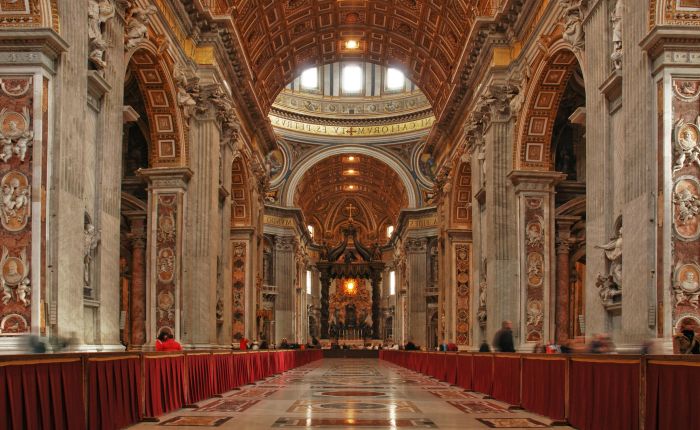
In terms of seasonal timing:
- 🏆 Best overall: October and November. Fewer tourists, mild weather, and entry slots are easier to get.
- ✅ Good: February and early March. Quiet, though some mornings are cold.
- ⚠️ Busy: April through September, especially Easter week. Queues are long even for pre-booked visitors.
- ❌ Very crowded: August. Heat and visitor numbers combine to make this the least comfortable month.
- 📅 Avoid Wednesday mornings — the Papal Audience in St. Peter’s Square draws large crowds. Tuesdays and Thursdays are usually the calmest weekdays.
- → Current hours and closures are listed on the official Vatican Museums ticket page.
The 2025 Catholic Jubilee Year brought record numbers of pilgrims to Rome and concluded in January 2026. Crowds remain heavier than usual through 2026, so book your entry slot as far ahead as you can.
How to Get to the Vatican
The Vatican Museums entrance is on Viale Vaticano, on the north side of the city walls. This is a different entrance from St. Peter’s Basilica, which is reached via St. Peter’s Square — the two are a 10 to 15 minute walk apart, so make sure you head to the right one. Public transport is the easiest way in; driving is not recommended because of traffic and the lack of parking.
- 🚇 Metro: Line A (direction Battistini), stops Ottaviano–San Pietro–Musei Vaticani or Cipro — both about an 8 to 10 minute walk to the entrance. The metro runs roughly 5:30 am to 11:30 pm, until 1:30 am on Fridays and Saturdays.
- 🚌 Bus: line 49 stops directly in front of the museum entrance; lines 32, 81 and 982 stop at Piazza del Risorgimento (about 5 minutes’ walk); lines 492 and 990 stop on Via Leone IV / Via degli Scipioni (about 5 minutes).
- 🚊 Tram: line 19 ends at Piazza del Risorgimento, about a 10-minute walk from the entrance.
- 🚕 Taxi: there is an official taxi rank in the square in front of the museums.
- 🚉 From Termini: Metro Line A toward Battistini to Ottaviano, then roughly 7 minutes on foot.
Visiting from a Cruise Ship (Civitavecchia)
Rome’s cruise port is Civitavecchia, about 80 km (50 miles) northwest of the city. The Vatican is not near the port, and this is the single most underestimated logistics problem in a Rome port day. Here is how it actually works.
Port to city. Once ashore, a free shuttle runs from the ship to the port gate. From there it’s a 10 to 15 minute walk, or a paid local shuttle, to Civitavecchia train station. Trains to Rome run roughly twice an hour: regional services take 70 to 80 minutes, while less frequent fast trains do it in around 45 minutes for a higher fare.
Which station. Get off at Roma San Pietro, not Termini. San Pietro is the closest station to the Vatican — about a 10 to 15 minute walk — while Termini puts you across the city and adds a metro leg in both directions. Buy tickets in advance on Trenitalia, and validate regional tickets before boarding.
The real time budget. Door to door, plan on 1.5 to 2 hours each way. Most ships give 4 to 6 hours ashore. That leaves you two to three hours in Rome — enough for the Vatican Museums, or the Museums and a quick look at the Basilica, and nothing else. Attempting the Colosseum in the same port day is where people miss their ship.
Working backwards from all-aboard. Check your ship’s all-aboard time, usually 30 to 60 minutes before departure. Aim to be back in Civitavecchia 1 to 1.5 hours before that, which means leaving Rome 3 to 4 hours before the ship departs. Write the departure time on your hand if you have to.
The risk nobody mentions. If you travel independently and a regional train is delayed, no one holds the ship. Miss all-aboard and it leaves without you — you then reach the next port at your own expense, including visas and flights. A ship-organised excursion, or a tour with a licensed operator that guarantees your return, transfers that risk off you. Whichever you choose, a pre-booked entry slot is essential: with a window this tight, the on-site queue alone can consume your entire day ashore.
Prefer a Private English-Speaking Guide in Rome?
A ticket gets you through the door — a guide changes what you take away from the visit. Because speaking isn’t permitted inside the Sistine Chapel, a licensed guide briefs you on the frescoes in the corridors just before you enter, and many private tours include the internal passage straight into St. Peter’s Basilica.
OfficialGuides connects travellers directly with licensed independent guides in Rome. No agency layer, no commission on the guide’s fee.
Vatican Ticket Prices & Options
Every standard ticket includes the Sistine Chapel. The official adult price is €20 at the door or €25 online including the €5 reservation fee. Reduced entry — ages 6 to 18, and students under 25 with ID — is €10, or €15 online. Children under 6 enter free.
If the official site is sold out for your dates, resale platforms hold separate inventory at a premium. Here’s how the options compare:
| Ticket option | Price |
|---|---|
| Official site, booked online €25 including the €5 reservation fee. Cheapest option if your dates are still available — book here first. | €25 |
| Box office, on the day Full €20, reduced €10. Expect a two to three hour queue in peak season, with no guaranteed entry once daily slots run out. | €20 |
| Timed-entry ticket (resale) Museums and Sistine Chapel, no guide. Useful when official slots are gone for your dates. Audio guides rentable inside. | from €43 Check availability → |
| Guided tour with St. Peter’s Basilica Small-group tour with a licensed guide, plus the internal passage from the Sistine Chapel into the Basilica — avoids the external security queue. | from €89 |
Resale prices are starting figures and vary by date and availability. Note that no ticket — official or resale — lets you bypass the mandatory airport-style security screening at the entrance.
There is no single best Vatican ticket. It depends on how far ahead you’re booking, how much time you have, and whether you want someone explaining what you’re looking at. Four main types:
🎫 Timed-Entry Ticket
A fixed entry slot for the Museums and Sistine Chapel, no guide. Sensible if you’ve visited before or are watching your budget. Audio guides can be rented at the entrance. Official slots sell out 10 to 30 days ahead in high season.
👥 Small-Group Guided Tour
Groups of 12 to 15 with a licensed guide. Includes a pre-booked entry slot, commentary, and usually the direct passage to St. Peter’s Basilica. The default choice for first-time visitors.
🌅 Early Morning Access Tour
Entry before the museums open to the public, usually from 7:30 or 8:00 am. You get the Sistine Chapel relatively empty for a short window. Limited places, books out weeks in advance.
🔒 Private Guided Tour
A licensed guide exclusively for your party. You set the pace, ask questions freely, and focus on what interests you. Best for families, art-focused travellers, and anyone on a tight schedule.
Match your visit to the right option
First time in Rome, half a day available → Small-group guided tour including St. Peter’s.
Return visitor, prefer to explore independently → Timed-entry ticket plus a rented audio guide.
Travelling with family or an art-focused group → Private guided tour.
Want the Sistine Chapel with fewer people → Early morning access tour.
Arriving on a cruise with a fixed all-aboard time → A tour that guarantees your return to Civitavecchia.
Need a private expert guide for Rome, not a fixed tour → See our licensed tour guides in Rome.
Practical Tips Before You Go
- 📱 Mobile tickets work fine. No printing required. Guards scan the QR code directly from your phone screen.
- 🧣 Dress code is enforced. Shoulders and knees covered, for everyone. Carry a scarf or light layer if you’re in summer clothes — guards turn people away at the entrance daily.
- 🎒 Large bags go in the cloakroom. Anything bigger than 40 × 30 × 15 cm must be checked. It’s free, but factor in the queue on busy days.
- 💰 Budget for extras: audio guides, the dome climb at St. Peter’s, and the Vatican Grottoes each carry a separate fee.
- 🍽️ There’s a café inside. The Caffè Vaticano and the Pigna Courtyard Café are both within the complex. Outside food is not permitted.
- ♿ Good accessibility. Ramps, lifts, and free wheelchair rental at the entrance with a refundable deposit.
- 🆓 St. Peter’s Basilica is always free — the dome climb is the only paid part, ticketed at the Basilica itself.
Frequently Asked Questions
Do I need a separate ticket for the Sistine Chapel?
No. The Sistine Chapel sits inside the Vatican Museums, and any Vatican Museums ticket includes access to it. You cannot visit the chapel independently; the only way in is through the museum complex.
Is St. Peter’s Basilica included in Vatican Museums tickets?
Not in standard tickets. The Basilica has its own free entrance from St. Peter’s Square. Many guided tours, however, include a direct passageway from the Sistine Chapel into the Basilica, which saves time and avoids the external security queue.
How far in advance should I book Vatican tickets?
At least two to four weeks ahead during peak season, April through October. For July, August, or Easter week, aim for four to six weeks. Rome remains busy following the 2025 Jubilee Year, so longer lead times are still advisable through 2026.
How much does a Vatican Museums ticket cost?
The official adult price is €20 at the door or €25 online, including the €5 reservation fee. Reduced entry is €10 for ages 6 to 18 and students under 25 with valid ID, or €15 online. Children under 6 enter free. Resale platforms start higher in exchange for availability when official slots are gone.
Can I buy tickets at the door on the day?
Technically yes, but the on-site queue often runs two to three hours in peak season, and there’s no guarantee of entry once the day’s slots are gone. The Vatican has moved steadily toward pre-booked entry since 2022, so booking online is strongly recommended.
Are there discounts for students or children?
Children under 6 enter free. Visitors aged 6 to 18, and students under 25 with a valid student ID, pay the reduced rate. Bring documentation — a passport for children, a student ID for students — as staff check at the entrance.
Can I take photos inside the Vatican Museums?
Photography is allowed in most gallery areas. The exception is the Sistine Chapel, where photography is prohibited even without flash. This is actively enforced and applies to everyone.
What is the Vatican Museums dress code?
Both men and women must cover shoulders and knees. No tank tops, sleeveless shirts, shorts above the knee, or hats worn inside. The dress code applies to the entire complex, and guards will turn you away at the entrance if you’re not appropriately dressed.
How long does a Vatican visit take?
A guided group tour typically runs 2.5 to 3 hours. Visiting independently and covering the main galleries takes at least 3 hours for the museums alone. Add another 1 to 1.5 hours for St. Peter’s Basilica and the dome.
Can I visit the Vatican from a cruise ship in one day?
Yes, but only the Vatican. From Civitavecchia, allow 1.5 to 2 hours each way door to door. With a typical 4 to 6 hour shore window that leaves two to three hours in Rome — enough for the Museums, not enough to add the Colosseum or the historic centre.
Planning Your Vatican Visit
Start with the official Vatican booking site — it’s the cheapest route if your dates are open. If they’re sold out, resale platforms hold separate inventory.
This page is also available in: العربية · 简体中文 · Čeština · Nederlands · Français · Deutsch · Ελληνικα · Magyar · Italiano · 日本語 · 한국어 · polski · Português · Română · Русский · Español · Svenska · Türkçe